By Matteo Martignago, cinematographer and colorist. Updated November 2026.
There’s nothing quite like watching the sun dip below the horizon with a camera in hand. Over the years, I’ve spent countless evenings chasing that perfect golden glow, learning what works (and what doesn’t) when it comes to capturing stunning sunset landscapes.
In this post, I’m sharing 7 tips that have made a real difference in my photos, from dialing in the right camera settings to choosing the best focal lengths for dramatic, light-filled shots. Whether you’re just getting started or want to refine your approach, these tips will help you make the most of those fleeting sunset moments.
Let’s jump in.
How to photograph landscapes at sunset, in short:
- Check where and when the sun will set, and arrive 30 to 45 minutes early to find your foreground and set up.
- Put the camera on a tripod, shoot RAW, and start at your base ISO and around f/8 to f/11.
- Expose for the sky: keep the brightest clouds from clipping, then bracket or use a graduated ND filter if the foreground goes too dark.
- Set white balance to Daylight so the warm color is kept rather than neutralized.
- Keep shooting after the sun has gone: the afterglow and the blue hour that follows often give the best color of the evening.
What is Landscape Photography
Landscape photography is a genre of photography that captures natural scenery such as mountains, forests, rivers, and beaches. It typically involves large-scale scenes and can be captured using a wide-angle lens. Landscape photographers often try to convey a sense of scale or grandeur in their images.

Some of the most iconic landscape photographs show vast mountain ranges, pristine forests, or thundering waterfalls. These images are often taken from a distance, using a telephoto lens to compress the scene and make the subject appear larger than life. Other times, landscape photographers will get up close and personal with their subjects, using a wide-angle lens to capture the full scope of the scene.
Whether you’re shooting from a distance or up close, there are a few things you can do to improve when shooting sunset pictures. In this blog post, we’ll cover seven tips that will help you shooting sunsets.
Why Sunset Is The Perfect Time To Photograph Landscapes
There’s something magical about sunset. The way the light casts a warm glow over the landscape, turning even the most mundane subjects into something beautiful. It’s no wonder that sunset is one of the most popular times for landscape photography.

During sunset, the sun is lower in the sky, which means that there are longer shadows. This can add depth and dimension to your photos. The low angle of the sun also means that you’ll be able to capture more interesting light rays and sunbeams.
The colors during sunset are also incredibly beautiful. The warm tones of the setting sun create a stunning backdrop for any photo. Whether you’re photographing mountains, forests, or even urban landscapes, sunset is the perfect time to capture the beauty of the scene.
When to Shoot: Golden Hour, Sunset and Blue Hour
Sunset photography is really three short windows. Golden hour has no official definition; photographers usually mean the time when the sun is less than about 6° above the horizon, when the light is warm and the shadows are long. The sunset itself is brief, and the sun is at its harshest relative to the sky, so this is when exposure is hardest. Then comes the blue hour, when the sun is roughly 4° to 8° below the horizon and the sky turns deep blue (definitions vary).
Do not pack up when the sun disappears. On evenings with high cloud, the clouds often light up in the minutes after sunset, and the sky is now dim enough that the foreground and sky are closer in brightness. A sun-path app tells you the exact times for your location.
7 Sunset Photography Tips
1) Use The Right Camera Settings

Once you’ve found a good spot to shoot from, it’s time to start setting up your camera. When shooting landscapes at sunset, it’s important to use the right settings for the job.
The best camera settings for landscape sunset photography are:
- A low ISO setting. This will help to reduce the amount of noise in your photo.
- A Small Aperture. This will help to keep your whole scene in focus.
- A Slow Shutter Speed. This will allow you to capture the movement of the clouds and the colors of the sunset.
You may need to adjust your settings depending on the light conditions as well.
With sunset photography, it’s important to use the right white balance setting. A good starting white balance for sunsets is “Daylight.” It records the warm light the way it looks, whereas Auto white balance often tries to neutralize the orange and can leave the scene looking flat.
Expose for the sky, not the foreground. The sky is the brightest part of the frame, and blown-out highlights cannot be recovered, so check the histogram and reduce exposure until the brightest clouds keep their detail. If that leaves the foreground too dark, bracket a few exposures and blend them later, or use a graduated ND filter (see tip 3).
If you’re shooting in RAW format, you can always correct the white balance in post-processing. However, it’s always best to get it right in camera.
2) Use Different Shutter Speeds

When shooting sunset landscapes, one of the best things you can do is experiment with different shutter speeds. A slow shutter speed will allow you to capture the movement of the clouds and the colors of the sunset.
To get a slow shutter, you’ll need to use a tripod. This will help to keep your camera steady and prevent any blurriness in your photo.
Once you’ve set up your tripod, it’s time to start experimenting with different shutter speeds. To get started, try setting your shutter speed to one second. This will give you a good starting point for capturing the sunset landscape.
From there, you can increase or decrease your shutter speed depending on the results you’re looking for. If you want to capture more of the movement in the clouds, try a longer exposure of two or three seconds. If you’re looking for a more static photo, try a shorter one, such as half a second or faster.
It’s important to note that the longer your shutter speed, the more motion blur will be introduced into your photo. So, be sure to experiment with different shutter speeds and find the right one for your scene.
3) Use Lens Filters

When shooting sunset landscapes, it’s important to use the right filters. This will help to improve the quality of your photos and give them a more professional look.
The best filter for sunset photography is a Variable ND Filter. This type of filter allows you to control the amount of light that enters your lens. It cuts the light reaching the sensor, so you can use a slower shutter speed than the light would otherwise allow. For a bright sky over a dark foreground, a graduated ND filter, dark at the top and clear at the bottom, is the classic sunset filter, because it darkens only the sky.
A variable ND filter also gives you more flexibility when composing your photo. Since you can control the amount of light that passes through the filter, you can dial the strength up or down as the light fades.
If you’re looking for a good variable ND filter, I recommend the Syrp Variable ND Filter.
This filter allows you to reduce exposure between 1 and 8.5 stops, giving you more control over your photos.
With two step-up rings to extend its use on lenses of varying diameters, this filter kit is versatile and easy to use. You’ll be able to fine-tune exposure reduction quickly and easily, so you can get the perfect photo every time.
4) Sunstar Effect

One of the coolest things you can create with sunset landscape photography is a Sunstar effect. This is when you photograph the sun at a certain angle so that it creates a starburst effect in your photo.
To achieve this effect, you’ll need to use a narrow aperture (f/11 at least, and ideally f/16 or even f/22) and focus on your scene, not on the sun. Stopping down past f/16 softens the whole image through diffraction, so use the widest of these apertures that still gives you a star (B&H explains the trade-off).
Sunstars work best when the sun is a small, bright point: just as it touches the horizon, or partly hidden behind the edge of a tree, rock or building. The number of points depends on your lens. An even number of aperture blades gives that many points, and an odd number gives twice as many. Compose with live view rather than looking at the sun through an optical viewfinder, especially with a telephoto lens.

So, next time you’re out shooting sunsets, keep an eye out for this magical effect. With a little practice, you’ll be able to capture some incredible sunset photos with a beautiful Sunstar effect.
5) Know Exactly Where the Sun Is Going To Set

One of the most important things to consider when photographing landscapes at sunset is knowing exactly where the sun is going to set. Knowing the direction in advance lets you choose a foreground that sits in the right place relative to the sun.
To avoid this, it’s important to scout out the location ahead of time and plan your shots accordingly. Try to find a spot with some good foreground interest and check whether the sun will drop behind mountains, which ends the direct light earlier than the official sunset time, or set over open water or flat land.
Sun Seeker is an app that allows you to see the sun’s trajectory in real-time. This is a great tool for sunset photography, as it allows you to plan your shots accordingly.
With this app, you can see exactly where the sun will be at any given time. You can also see how the sun will move throughout the day, making it easy to plan out your shots.
If you’re looking for an app that will help improve your sunset landscape photos, Sun Seeker is definitely worth checking out. It is available for iPhone; on Android, look for a similar sun-path app.
6) Look for A Unique Perspective
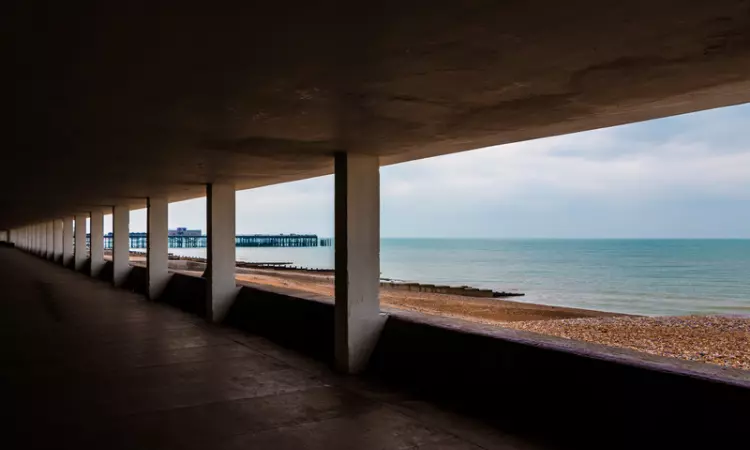
When it comes to taking beautiful sunset photos, one of the best things you can do is find a unique perspective. This can be anything from shooting from high up on a mountain to finding an interesting foreground subject.
The key is to find something that will make your photo stand out from all the other sunset photos out there. With so many sunset photos out there, it’s important to find a way to make yours stand out.
Perspective is one of the most important aspects of sunset photography. The way you position yourself and your camera can completely change the look and feel of your sunset photos.
Here are a few tips to help you get the best perspective for your sunset landscape photos:
- Get low to the ground for an intimate feeling sunset photo.
- Climb to a high vantage point for a sweeping sunset landscape photo.
- Position yourself so that the sun is setting behind an interesting object, such as a mountain, tree, or building.

By following these tips, you’ll be sure to capture sunset photos with incredible perspective!
7) Composition Is Key
Composition is the placement or arrangement of visual elements in a scene. It is important in sunset photography because it can make or break a photo. A well-composed sunset photo will be pleasing to the eye and have a certain balance to it.
The rule of thirds is one of the most basic rules of composition. It states that you should divide the scene into thirds, both horizontally and vertically, and place the important elements in your photo along these lines. This will create a more balanced and visually appealing photo.
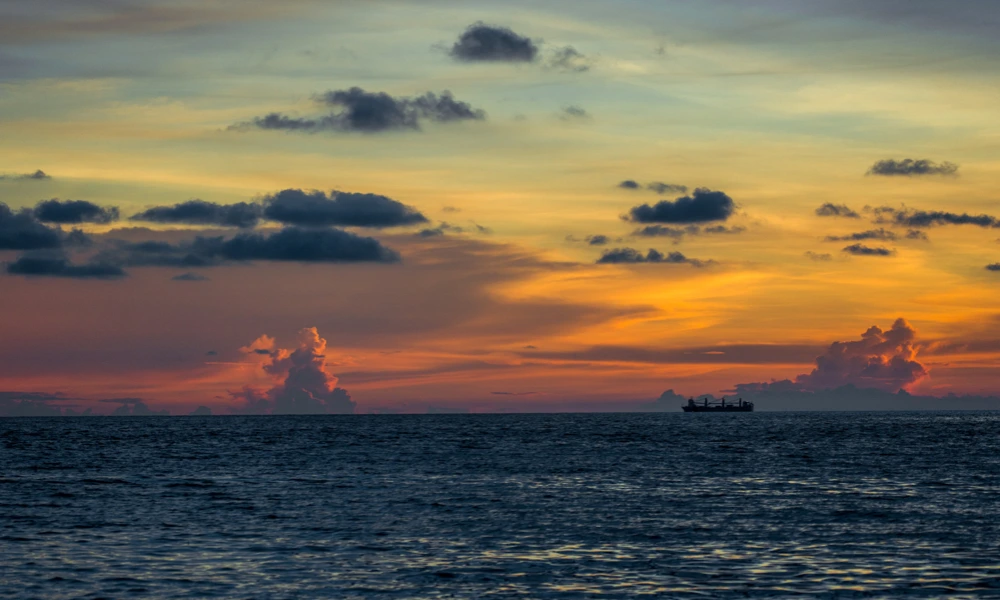
There are many other rules of composition that can help improve your sunset photos. For example, you can try using leading lines to draw the viewer’s eye towards the sunset, or using symmetry to create a more harmonious photo. By experimenting with different composition techniques, you can create some truly stunning sunset photos!
Conclusion
These are just a few tips to help you take better sunset landscape photos. With a little practice, you’ll be able to capture some incredible sunset photos. Just remember to plan your shots carefully, experiment with different settings, and have fun!
If you have any questions feel free to comment below!
FAQ – Sunset Landscape Photography
What is the best exposure setting for capturing sunset images?
The best exposure setting for capturing sunset images often involves using a graduated neutral density (GND) filter to balance the bright sky with the darker foreground elements. This helps in achieving the right exposure without losing details in the highlights or shadows.
How can I create fine art sunset photographs?
To create fine art sunset photographs, focus on composition, use interesting foreground elements, and experiment with different shutter speeds to capture the colors of a sunset. Pay attention to the mood you want to convey, whether it’s a serene scene or a dramatic silhouette.
What does bracketing mean in sunset photography?
Bracketing in sunset photography refers to taking multiple shots at different exposure levels. This technique allows you to capture a range of sunset shots, ensuring that you have at least one image with the perfect exposure for the sunset colors and details.
How can I avoid lens flare when photographing sunsets?
To avoid lens flare when photographing sunsets, try to position your camera so that the sun is not directly in the frame. You can also use a lens hood or your hand to block the sun’s rays from hitting the lens directly, which helps maintain sharpness and clarity in your sunset photograph.
What are some tips for capturing moody sunset scenes?
To capture moody sunset scenes, look for atmospheric conditions such as clouds or mist that can enhance the drama. Use slower shutter speeds to create a sense of movement in the sky and focus on the warm light and golden hues that can evoke emotion in your sunset images.
How do I choose the main subject for my sunset shots?
Choosing the main subject for your sunset shots involves finding a focal point that draws the viewer’s attention. This could be a tree, a rock formation, or even a silhouette of a person against the backdrop of the sunset. Ensure that the subject complements the colors of a sunset and adds depth to the landscape scenes.
What role do atmospheric conditions play in sunset photography?
Atmospheric conditions play a crucial role in sunset photography as they can affect the colors and overall mood of the scene. Particles such as dust or moisture in the air can enhance the hues and create stunning reflections, making your sunset shots more vibrant and dynamic.
How can I find the perfect spot for capturing an awe-inspiring sunset?
Finding the perfect spot for capturing an awe-inspiring sunset involves scouting locations in advance, considering factors like elevation, foreground elements, and unobstructed views of the horizon. Late afternoon and early evening are ideal times to explore and set up your shot.
What is the importance of the camera’s sensor in sunset photography?
The camera’s sensor is important in sunset photography as it determines how well your camera can capture light and detail in varying conditions. A larger sensor typically performs better in low light, allowing you to capture the rich colors and subtle details of a sunset photograph.