By Matteo Martignago, cinematographer and colorist. Updated November 2026.
Some links below are affiliate links: buying through them costs you nothing extra and never changes which webcams make the list.
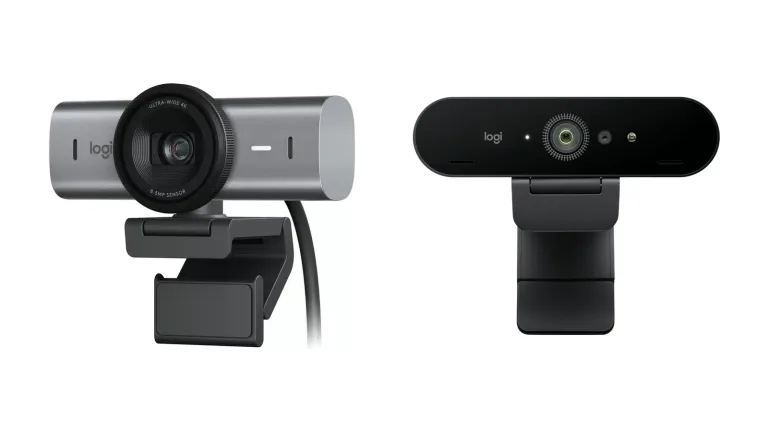
The best webcam for podcasting for most people is the Logitech MX Brio: a real 4K sensor upgrade over the old Brio, plug-and-play over USB-C, and it looks good the moment you light it properly. But here is what most “best webcam” lists leave out: on a seated talking-head show, the camera is the least important thing you will buy. Nail the lighting, the framing, and a dedicated microphone, and a good webcam will out-shoot a $1,500 mirrorless rig sitting in a dim, cluttered room, nearly every time. This guide gives you the current 2026 picks, the specs that matter, and a straight answer on when a webcam is enough and when it is not.
The best webcams for podcasting in 2026, at a glance
| Best webcam for | Model |
|---|---|
| The best all-around pick | Logitech MX Brio |
| The best picture for a host who sits still | Elgato Facecam 4K |
| A camera that follows you | Insta360 Link 2 Pro |
| A tiny 4K webcam with AI framing | OBSBOT Meet 2 |
| The closest thing to a real camera | Razer Kiyo Pro Ultra |
| The cheapest webcam that still works | Logitech C920s |
Webcam vs. podcast camera: what is the difference, and do you need one?
The short answer: a webcam is a small, fixed-lens USB camera made for your computer. Plug it in and every recording, call and streaming app can use it. A “podcast camera” usually means a dedicated camera, most often a mirrorless body, sometimes a camcorder or a streaming camera such as Logitech’s Mevo, with a much larger sensor and a better lens, connected through a capture card or over the network. Almost all of the difference you see on screen comes from that sensor and lens.
| Webcam | Podcast camera (mirrorless) | |
|---|---|---|
| Connection | USB, plug and play | HDMI into a capture card, or USB on some models |
| Sensor | Small: about 1/2.5 to 1/1.2 inch | APS-C or full frame, roughly 4 to 35 times the area |
| Background blur | A little on big-sensor models, otherwise software | Real, from the lens |
| Long recordings | No time limit or overheating | Some bodies overheat or stop |
| Cost to get started | About $50 to $400 | $1,000 and up with a lens and capture card |
| Best for | Most desk podcasts | Shallow-focus looks and multi-camera shows |
Before you spend anything, answer the question the affiliate lists skip: does a podcast like yours need a mirrorless camera, or is a webcam enough? Having shot both ways, here is the straight answer.
A webcam is genuinely enough for a solo or two-host show recorded at a desk in a room you can light, for anyone who wants plug-and-play USB with nothing to configure, and for long sessions, because a webcam has no recording time limit, no battery to die, and no sensor to overheat halfway through a two-hour episode. That covers most video podcasts. In practice, most video podcasters run webcams rather than cameras, and for the reasons above, that is usually the right call.
Step up to a mirrorless camera only when you specifically want a shallow depth of field (that soft, blurred background), meaningfully better low-light performance, or multiple camera angles cut together. Just price the whole move honestly before you commit, because the body is only the start:
| The real cost of the “real camera” route | Approx. | The catch |
|---|---|---|
| Mirrorless body | $700-1,300 | Only the beginning |
| Lens | $200-600 | Often sold separately |
| Capture card (HDMI to USB) | $120-180 | Needed to get it into your computer |
| Dummy battery or AC adapter | $25-50 | So it does not die mid-record |
| Overheating and clean-HDMI gotchas | time, not money | Some bodies shut off or show menus on screen |
Add it up and the “cheap” camera upgrade is a $1,000-plus project with real complexity. There is also a middle path worth knowing: your phone. Apps like Camo, or Continuity Camera on an iPhone, turn a modern phone into an excellent webcam for free, and a recent phone often out-shoots a mid-range dedicated webcam. If you do decide to go the full camera route, our guide to the best cameras for podcasting covers the bodies worth buying.
What actually matters when you buy a podcast webcam
Spec sheets are written to sell you the biggest number. For a mostly static talking-head shot, the priorities are almost the reverse of what gets marketed. Here is what to weigh, in order:
- Sensor size beats megapixels. A larger sensor is the single biggest driver of image quality: better low light, more natural depth, cleaner color. A good 1080p camera with a big sensor beats a cheap 4K one with a tiny sensor, most of the time.
- 1080p vs 4K matters less than you think. Almost every platform streams your video back at 1080p anyway. The real value of 4K is crop headroom: room to punch in or reframe a vertical clip for TikTok or Reels without losing sharpness.
- Low light is the real differentiator. This is where cheap cameras fall apart into noise and mush. It is driven by sensor size and aperture, not resolution, which is why good lighting matters more than any spec (more on that below).
- Field of view: 78 to 85 degrees flatters one person. Very wide angles distort your face up close and drag in a messy background. Go wider only if you need two people in frame.
- Autofocus is oversold for a seated host. You barely move, so aggressive tracking autofocus solves a problem you do not have. It matters far more for a walk-and-talk than a desk show.
- 30fps is plenty; 60 is a nicety. Higher frame rates smooth motion you mostly do not have when you are sitting and talking.
- HDR earns its keep only against a window. If you have a bright window or backlight you cannot move, HDR helps. In a controlled room it does little.
- The built-in mic does not matter. Podcasting is audio-first, and every webcam mic is a backup at best. Use a dedicated microphone off to the side, and run your voice through a cleanup pass; our guide to the Adobe audio enhancer covers a free way to do that.
The 9 best webcams for podcasting in 2026
These are informed picks based on each maker’s published specs, reviews, and what I would put in front of someone, not a lab test. Every model was checked as still on sale in November 2026, and each button opens the camera’s Amazon listing, where you can see the current price and stock.
Best overall (4K): Logitech MX Brio
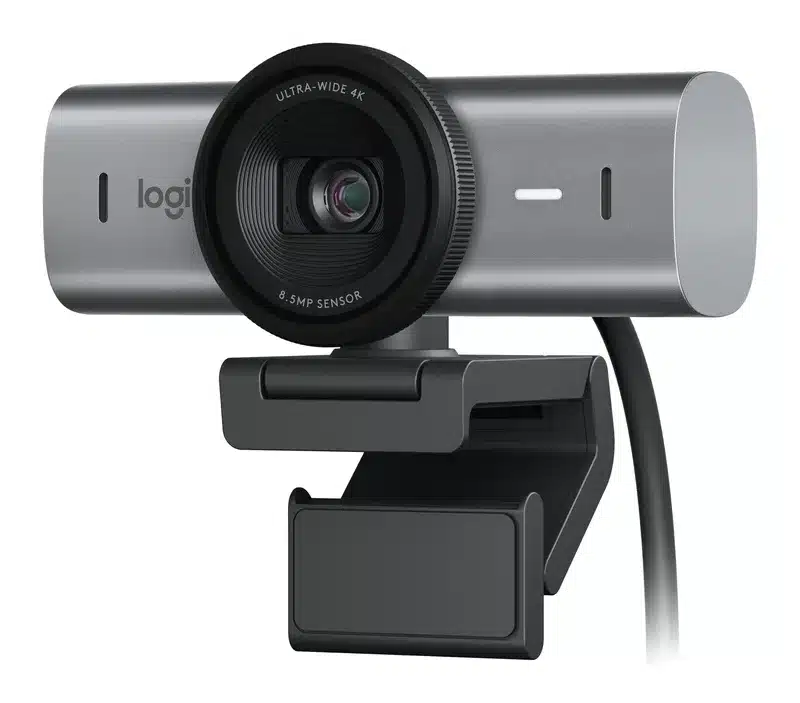
Logitech’s current 4K flagship and the default Logitech podcast camera for most people. It replaced the old Brio with a bigger sensor, USB-C, dual mics, and a Show Mode for demoing objects on a desk. If you want one webcam and do not want to think about it, this is it.
Key specs: 4K at 30fps or 1080p at 60fps, autofocus, a 90°, 78° or 65° field of view, dual beamforming mics, a built-in privacy shutter, USB-C.
Searching for a Logitech podcast camera? The MX Brio is Logitech’s best webcam for the job. Logitech’s Mevo cameras are a different kind of product: wireless streaming cameras for live, multi-camera shows, and the Mevo Core takes Micro Four Thirds lenses.
Best auto-tracking (PTZ): Insta360 Link 2 Pro
A gimbal-mounted 4K webcam that physically pans and tilts to follow you, now with a much bigger sensor. The Link 2 Pro moves up to a 1/1.3-inch sensor behind an f/1.9 lens, which Insta360 says gathers 2.23 times the light-sensitive area of the Link 2’s, so it holds up better in a dim room and adds a little natural background blur. Its redesigned dual mics can focus on your voice, though a podcast still wants a dedicated microphone. Tracking is overkill for a static desk, but it is the right call if you move, stand at a whiteboard, or present.
The original Link 2, with a 1/2-inch sensor, is the cheaper way into Insta360’s tracking, and the fixed Link 2C drops the gimbal if you do not need the camera to follow you.
Key specs: 1/1.3-inch sensor, f/1.9, 4K at 30fps, about 84° field of view, autofocus, 2-axis gimbal with AI tracking, dual mics, USB-C.
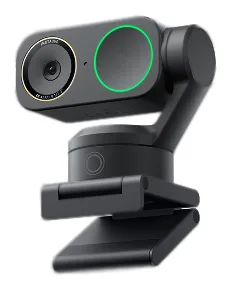
Best value PTZ (walk-and-talk): OBSBOT Tiny 2 Lite
Most of the tracking quality of OBSBOT’s pricier Tiny 2 for a good deal less. AI subject tracking and clean 4K make it the pick for hybrid presenters who do not sit still.
Key specs: 1/2-inch sensor, 4K at 30fps or 1080p at 60fps, about 79° field of view, autofocus, 2-axis gimbal with AI tracking, dual mics, USB-C.
If you want OBSBOT’s best, the Tiny 3 steps up to a 1/1.28-inch sensor, 1080p at up to 120fps and a three-mic array, for nearly three times the price.
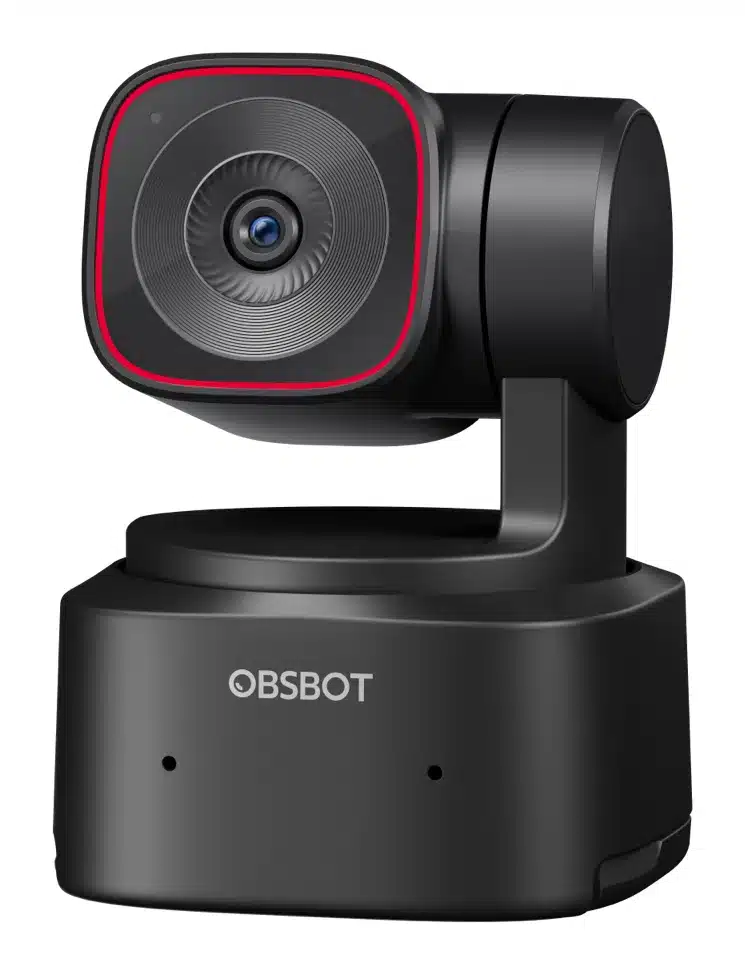
Best picture for a fixed desk shot: Elgato Facecam 4K
Elgato’s current flagship pairs a 1/1.8-inch Sony STARVIS 2 sensor with 4K at 60fps and camera-style manual control in Elgato’s Camera Hub app. Focus is fixed, sharp from about 30 to 120 cm at 4K, which suits a host who sits in one spot: it never hunts or pulses. It also takes 49mm lens filters, so you can add a diffusion or ND filter for a softer, more filmic look. There is no built-in mic, which does not matter if your voice goes into a real microphone, as it should.
If 1080p is all you need, the older Facecam MK.2 still gives you uncompressed 1080p60 and the same app for less.
Key specs: 1/1.8-inch sensor, 4K at 60fps, 90° field of view, fixed focus at f/4.0, no mic, USB-C (USB 3.0 for full quality).
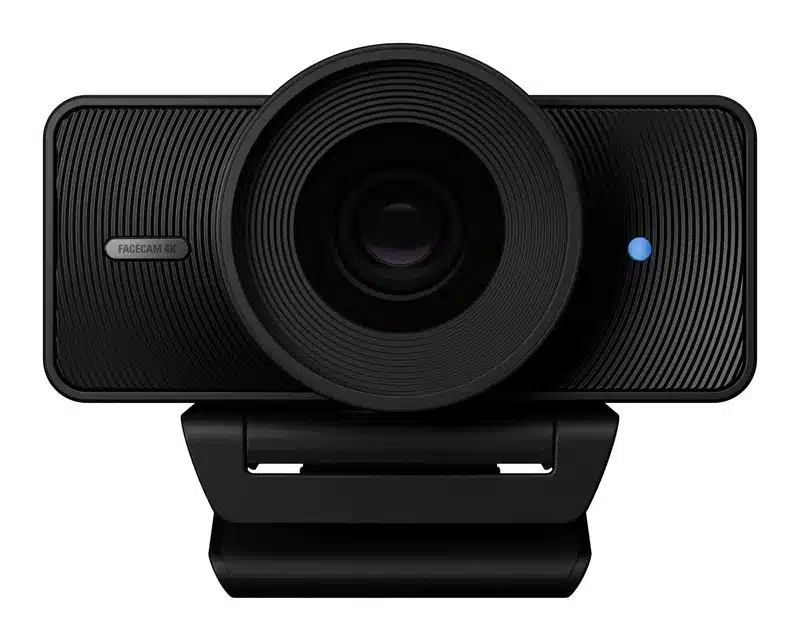
Best low light / large sensor: Razer Kiyo Pro Ultra
The webcam that gets closest to a “real camera” look, thanks to an unusually large sensor for the category. It is pricey and stock comes and goes, sometimes at a markup, so buy it when you find it near list price. Worth it if a shallow, low-light look is your priority.
Key specs: 1/1.2-inch Sony STARVIS 2 sensor, the largest here, f/1.7 lens, 4K at 30fps or 1080p at 60fps, 72° to 82° field of view, face-tracking autofocus, built-in mic and privacy shutter.
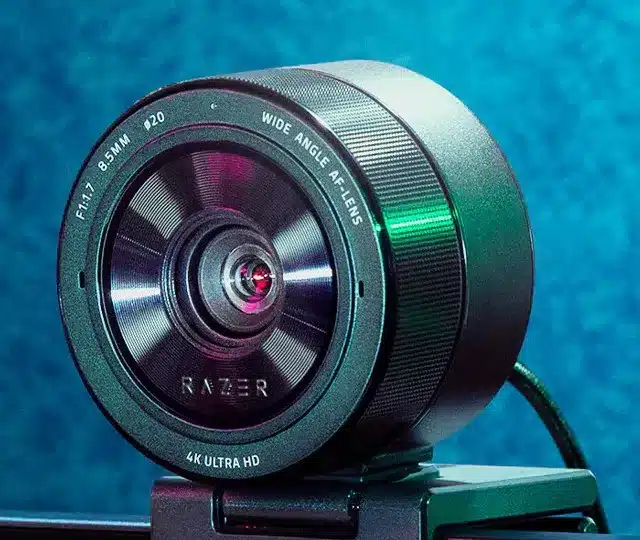
Best for hybrid work and meetings: Logitech Brio 500
Auto-framing, dependable auto-exposure, and a Show Mode for documents, in a 1080p mid-ranger. Aimed at Teams and Zoom, but an affordable podcast camera in a well-lit room.
Key specs: 1080p at 30fps, 90° field of view, autofocus, dual noise-reducing mics, privacy shutter, USB-C.
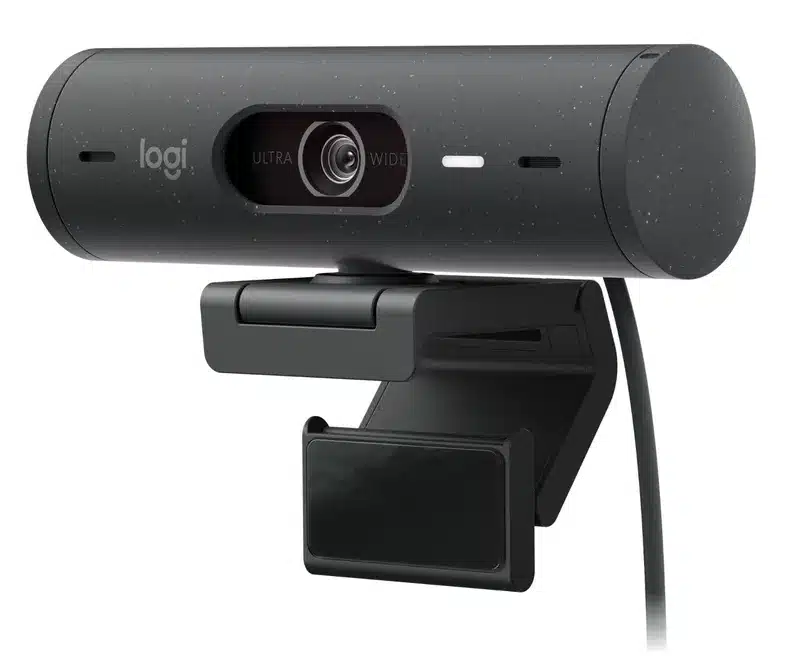
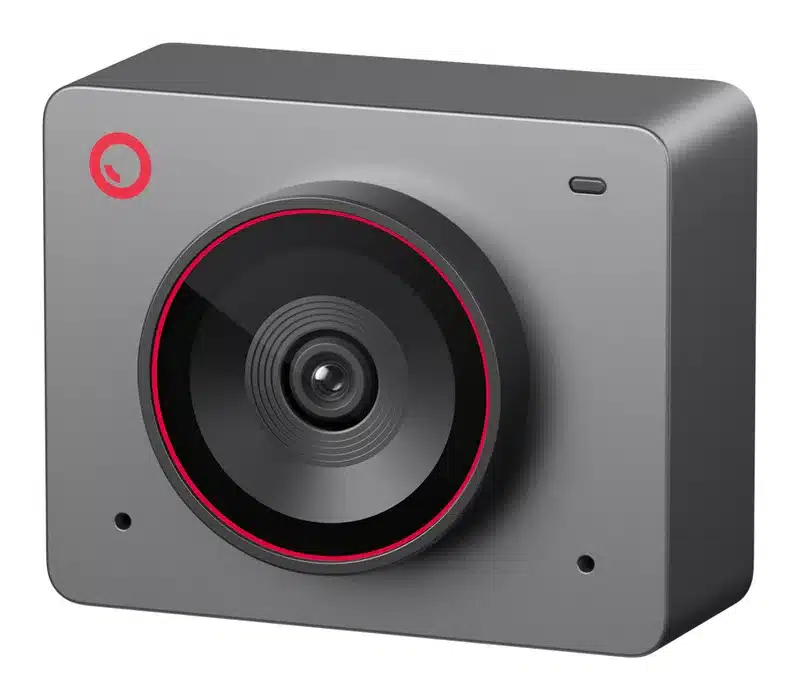
Best compact AI-framing webcam: OBSBOT Meet 2
The OBSBOT Meet 2 puts a 4K camera with a 1/2-inch sensor into a 40.5-gram body, small enough for a crowded desk or a laptop bag. AI framing and autofocus keep you, or a group, composed in the shot, and hand gestures turn the framing on and off or zoom without touching your computer. It runs on a single USB-C cable, and its dual noise-canceling mics are fine for calls, though a podcast still needs a dedicated microphone. It can run warm in long sessions, which OBSBOT says is normal. For a simpler alternative, look at the 2K Anker PowerConf C200.
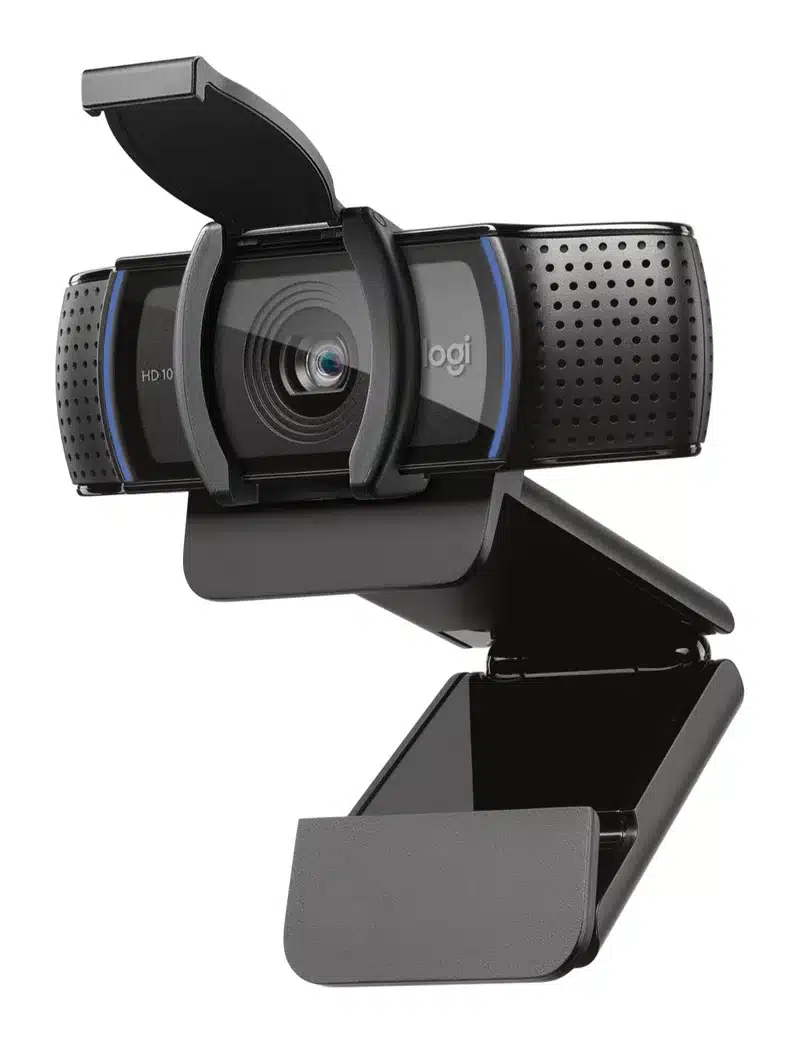
Best rock-bottom reliable pick: Logitech C920s
Aging, but it still works and it is cheap. A dependable 1080p option that has been in a million setups for a reason. If budget is the only concern, this is the safe floor.
Key specs: 1080p at 30fps, 78° field of view, autofocus, stereo mics, privacy shutter, USB-A.
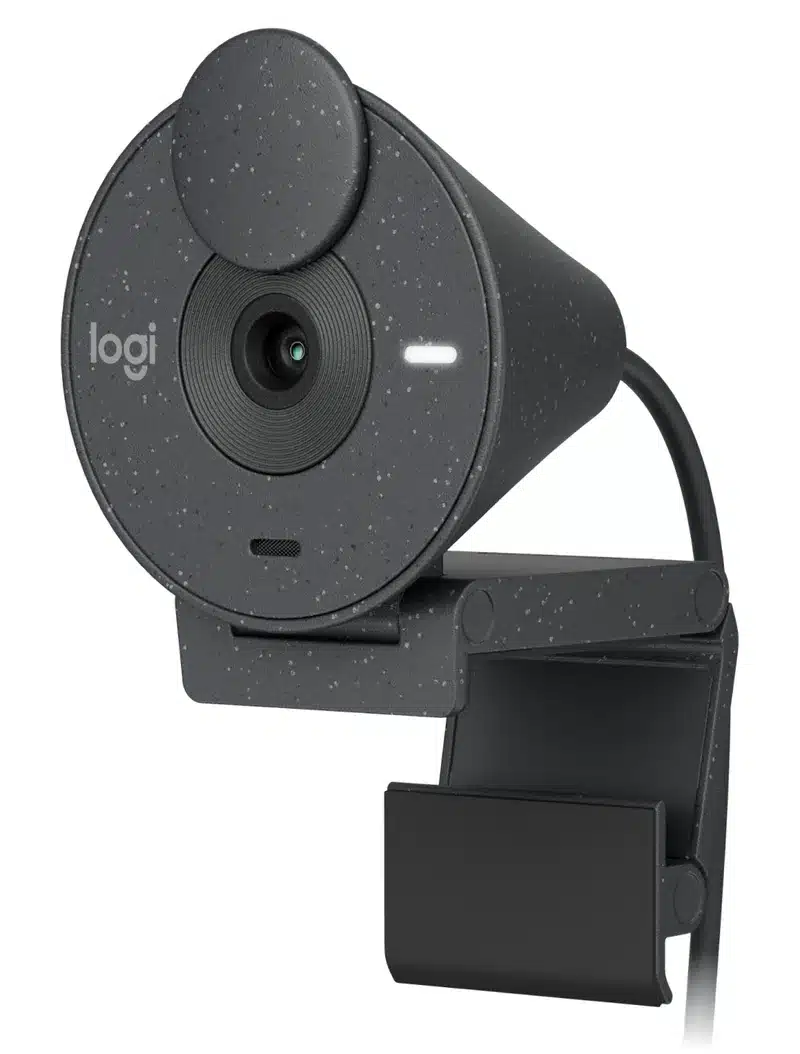
Best budget USB-C: Logitech Brio 300
USB-C and a physical privacy shutter on a current, low-cost 1080p webcam. The Brio 305 is the identical business version if that is what your retailer stocks.
Key specs: 1080p at 30fps, 70° field of view, fixed focus, mono noise-reducing mic, privacy shutter, USB-C.
Two honorable mentions worth naming: the Elgato Facecam Neo is a serious budget option, and the Razer Kiyo V2 X gives you sharp 1440p60 for a modest price.
Webcam spec comparison
The nine picks side by side, from each maker’s published specs. Sensor size matters most for low light and background blur; the bigger the fraction, the bigger the sensor.
| Model | Best for | Max video | Sensor | Field of view | Focus | Built-in mic | Amazon price |
|---|---|---|---|---|---|---|---|
| Logitech MX Brio | Best overall | 4K30 / 1080p60 | 8.5MP, size not published | 90° / 78° / 65° | Auto | Dual | $199 |
| Elgato Facecam 4K | Fixed desk shot | 4K60 | 1/1.8″ | 90° | Fixed | None | $160 |
| Insta360 Link 2 Pro | Auto-tracking | 4K30 | 1/1.3″ | 84° | Auto, AI tracking | Dual | $250 |
| OBSBOT Tiny 2 Lite | Value tracking | 4K30 / 1080p60 | 1/2″ | 79° | Auto, AI tracking | Dual | $119 |
| Razer Kiyo Pro Ultra | Low light | 4K30 / 1080p60 | 1/1.2″ | 72°–82° | Auto | Yes | $400 |
| Logitech Brio 500 | Hybrid work | 1080p30 | Not published | 90° | Auto | Dual | $133 |
| OBSBOT Meet 2 | Compact AI framing | 4K30 / 1080p60 | 1/2″ | 79° | Auto, AI framing | Dual | $99 |
| Logitech C920s | Rock bottom | 1080p30 | Not published | 78° | Auto | Stereo | $70 |
| Logitech Brio 300 | Budget USB-C | 1080p30 | 2MP, size not published | 70° | Fixed | Mono | $50 |
How to make any webcam look good: lighting, framing, and audio
This is the part that actually changes your image, and where a cinematographer’s habits beat a bigger spec sheet. Do these three things and a mid-range webcam looks better than an expensive camera left on auto in a bad room.
Light your face, not your ceiling
The single biggest upgrade is a proper key light. Put your main light slightly to one side, at about 30 to 45 degrees, roughly at eye level or a touch above. Add a softer fill on the opposite side to open up the shadows, and if you can, a light behind you to separate you from the background. The classic three-point setup takes two affordable lights and does more than any camera swap.
The mistakes to kill: a bright window behind you (it turns you into a silhouette), a single overhead ceiling light (it drops raccoon shadows under your eyes), and a mix of warm and cool bulbs (it gives your skin an odd color cast). If picture quality is still fighting you after the lights are right, our guide to improving video quality covers the rest.
Frame it at eye level
Put the lens at eye height, not down on the desk looking up your nose. Leave a little headroom, sit yourself slightly off-center, and put some depth behind you rather than a flat wall a foot away. A mid-tone shirt reads better on camera than busy patterns or pure white.
Audio is half your video
People forgive a soft picture; they click away from bad sound. Use a dedicated USB or XLR microphone placed just out of frame, never the webcam’s built-in mic. For a two-host show, match your two cameras and lock white balance on both so one of you is not warm while the other is cool. That color-matching discipline is the same one that separates a cinematographer from a videographer.
Best podcast webcam FAQ
What is the best webcam for podcasting in 2026?
For most video podcasts the Logitech MX Brio is the best all-around pick: true 4K, a larger sensor than the model it replaced, and simple USB-C setup. If you move around while presenting, an auto-tracking camera like the Insta360 Link 2 Pro is a better fit, and the Elgato Facecam 4K gives the best picture for a host who stays put.
Do I need a 4K webcam for a podcast?
Usually not. Most platforms stream your video back at 1080p, so 4K mainly buys you crop headroom for reframing or cutting vertical clips. A strong 1080p camera with a good sensor and proper lighting looks better than a cheap 4K one in a dim room. If you do want 4K, the Logitech MX Brio is the easiest pick, while the Elgato Facecam 4K, Insta360 Link 2 Pro and Razer Kiyo Pro Ultra have larger sensors for dimmer rooms.
Is a webcam good enough, or do I need a real camera?
For a seated show in a room you can light, a good webcam is all you need, and it has no recording limit or overheating to worry about. Step up to a mirrorless camera only if you specifically want a shallow, blurred background, better low light, or multiple angles, and budget for the lens, capture card, and power on top of the body.
What is the difference between a webcam and a podcast camera?
A webcam is a small, fixed-lens USB camera that any app on your computer can use the moment you plug it in. A podcast camera is usually a mirrorless camera or camcorder with a much larger sensor and a better lens, which gives cleaner low light and real background blur, but it needs a capture card, constant power and more setup. For most desk podcasts a good webcam is enough.
Is the Logitech MX Brio good for podcasting?
Yes. It is our top pick: 4K at 30fps, autofocus, a choice of 90, 78 or 65 degree framing, and plug-and-play USB-C. Light your face properly and pair it with a dedicated microphone, and it looks good on any video podcast.
What kind of webcam do streamers use?
Streamers tend to pick webcams with high frame rates and manual control, such as Elgato’s Facecam models, Razer’s Kiyo line and the Logitech MX Brio. Many larger streamers move to a mirrorless camera through a capture card once they want a shallower, more cinematic look.
Which webcam has the best built-in microphone?
None of them replaces a real microphone. Among the cameras here, the OBSBOT Tiny 3’s three-mic array and the Insta360 Link 2 Pro’s directional dual mics are the most capable for calls, but for a podcast record your voice on a dedicated USB or XLR mic.
Can I get a blurred background without a real camera?
Somewhat. Larger-sensor webcams like the Razer Kiyo Pro Ultra give a little natural background blur, and most webcam software offers a digital blur, though it can look artificial around your hair. True, natural shallow depth of field still needs a larger camera sensor and a fast lens.
Why does my webcam look worse than my phone?
Your phone has a much larger sensor and better processing than a typical webcam, so it often wins on image quality, especially in low light. That is exactly why phone-as-webcam apps like Camo and Continuity Camera are a legitimate free upgrade over a mid-range webcam.
Do I need a capture card for a podcast webcam?
No. A webcam connects straight over USB with nothing extra. You only need a capture card if you go the mirrorless or DSLR route, to turn the camera’s HDMI output into a signal your computer can record.
The bottom line
If you want a single answer, buy the Logitech MX Brio, light your face properly, and put a real microphone just out of frame. Spend on lighting and sound before you spend on the camera, because on a talking-head show that is where the quality comes from. A webcam covers most podcasts, and the moment it is not enough, you will know exactly why you are reaching for a bigger camera.
As an Amazon Associate, Artistic Hive earns from qualifying purchases.