By Matteo Martignago, cinematographer and founder of Artistic Hive · Updated July 2026
No, Cinemark XD is not the same as IMAX. XD is Cinemark’s own premium large-format screen; IMAX is a separate format built around a taller screen that shows more of the picture on films shot with IMAX cameras. In size and shape, XD is closest to a digital IMAX screen, usually at a lower ticket price.
The single biggest difference is the shape of the image. A true IMAX screen is taller, reaching a nearly square 1.43:1 aspect ratio, while Cinemark XD keeps a standard widescreen shape and competes on sheer width. XD tickets typically run about $16 to $20, a few dollars over a standard seat, with IMAX usually costing a little more, though prices swing by city and showtime.
Quick Verdict
- Choose IMAX for movies shot with IMAX cameras (many big blockbusters), the tallest screens, and maximum immersion. Worth it if there’s a true IMAX location nearby and you don’t mind paying more.
- Choose Cinemark XD for a very wide screen, plush reclining seats, and a premium picture at a lower price. It’s a strong value when the film wasn’t shot for IMAX anyway.
Cinemark XD vs IMAX: Full Comparison
| Feature | Cinemark XD | IMAX |
|---|---|---|
| What it is | Cinemark’s own premium format (since 2009) | Independent format & company (since 1967) |
| Screen size | Up to ~70 ft wide, wall-to-wall | Up to 100+ ft; digital IMAX is often smaller |
| Aspect ratio | Standard widescreen (no tall image) | 1.90:1 (digital) or a taller 1.43:1 (film/laser) |
| Projection | Barco 4K (laser at newer sites, xenon at others) | Dual 4K laser, or 70mm film at flagship sites |
| Sound | JBL surround, up to 11.1 channels (Auro 11.1 or 7.1); THX-certified | Proprietary 12-channel + overhead speakers |
| Seating | Plush recliners (heated/motion at some sites) | Tiered stadium seating for sightlines |
| 3D | Yes | Yes (dual-projector 3D) |
| Availability | Nearly 300 screens (US & Latin America) | 1,700+ theaters in ~90 countries |
| Ticket price | ~$16 to $20 (varies by market) | Usually a few dollars more |
| Best for | Value, width, comfort | IMAX-shot films, max immersion |
What Is Cinemark XD? (And What Does XD Stand For?)
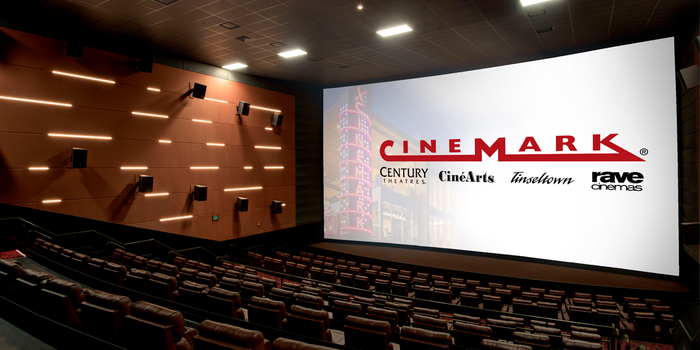
XD stands for “Extreme Digital.” It is Cinemark’s own premium large-format (PLF) auditorium, launched in 2009 to compete with IMAX and other big-screen formats. An “XD movie” is simply a film shown in one of these upgraded rooms: a wall-to-wall screen up to about 70 feet wide, Barco 4K projection, and a JBL surround system of up to 11.1 channels, usually in a stadium-seated auditorium with reclining seats. Cinemark now runs nearly 300 XD auditoriums, most of them in the United States, with more across Central and South America.
Because XD is Cinemark’s in-house brand, the experience is consistent from one Cinemark theater to the next. It isn’t tied to IMAX’s global certification standards, though, so it’s best understood as a very good widescreen presentation rather than a separate film format.
What Is IMAX?

IMAX is an independent company, founded in 1967, that licenses its projection systems, screens, and sound to more than 1,700 theaters across about 90 countries, with its first permanent theater dating to 1971. Its defining feature is a taller screen and image. On films shot with IMAX cameras, an IMAX screen can show noticeably more of the picture, top to bottom, than a standard widescreen presentation, which is why directors like Christopher Nolan shoot for IMAX.
True IMAX vs Digital IMAX (the “LieMAX” question)
Not all IMAX screens are equal, and this is where much of the “is XD the same as IMAX?” confusion starts:
- True IMAX (70mm film or IMAX with Laser at flagship theaters) uses the tallest 1.43:1 image on giant screens over 100 feet. This is the one thing Cinemark XD genuinely cannot replicate.
- Digital IMAX (the version in most multiplexes) uses a 1.90:1 image on a smaller screen. Fans sometimes call this “LieMAX.” In size and shape, Cinemark XD is roughly comparable to digital IMAX.
Screen Size & Aspect Ratio: Why IMAX Looks Taller
XD competes on width; IMAX competes on height. Everything else in this comparison follows from that.
Cinemark XD screens
XD screens run wall-to-wall and floor-to-ceiling, up to roughly 70 feet wide, about the width of a digital IMAX screen. The picture keeps a standard widescreen shape, so what you gain is scale and a very wide field of view rather than a taller image.
IMAX screens
Flagship IMAX screens exceed 100 feet and use a much taller 1.43:1 aspect ratio, close to square. On a movie shot with IMAX cameras, that taller frame reveals more of the scene above and below what any widescreen shows. Digital IMAX screens are smaller and use a 1.90:1 ratio that sits closer to XD’s shape.
Here is what that difference actually means behind the camera. A 1.43:1 IMAX frame is nearly square, so a director framing for it can stack action vertically and fill the screen from floor to ceiling; a 1.90:1 digital-IMAX or XD frame is a letterbox by comparison. That is why filmmakers like Nolan originate on IMAX cameras: they compose shots that only open up fully on a true IMAX screen, and on any other screen the image is cropped back to widescreen.
Image Quality & Projection
Cinemark XD uses Barco 4K projection (laser at newer and converted auditoriums, xenon at others) for a bright, sharp, high-contrast picture with a very wide color range. IMAX uses dual 4K laser projectors (“IMAX with Laser”) at premium locations, older 2K dual-digital systems elsewhere, and true 70mm film at a handful of flagship theaters. On a normal Friday-night release the two look comparably crisp; the gap only opens on a title mastered in the IMAX format.
Sound Systems
Cinemark XD runs a JBL surround system of up to 11.1 channels (many sites use Auro 11.1, others 7.1), with speakers placed around and above the audience and THX certification for the room’s tuning. IMAX uses its own proprietary 12-channel system with a dedicated overhead speaker array, calibrated to each auditorium’s exact geometry. Both are a clear step up from a standard screen: IMAX’s system is the more precisely tuned of the two, while XD’s hits hard and wraps around you.
Seating & Comfort
Comfort is one area where XD often wins. Cinemark XD auditoriums typically feature plush reclining seats with generous legroom, and some locations add heated recliners or even motion seating. IMAX prioritizes sightlines with steeply tiered stadium seating so every seat faces the huge screen squarely. Recliners show up at some newer IMAX houses, but they aren’t the standard, so if a laid-back chair matters to you, XD usually has the edge.
3D Capabilities
Both formats show 3D. IMAX 3D uses a dual-projector system that sends a separate image to each eye for a bright, precise effect, and some titles are specifically remastered for it. Cinemark XD also delivers crisp, bright 3D, and most releases look about the same in either room; IMAX only separates itself on the handful of titles finished specifically for its own 3D format.
Ticket Pricing & Value: Is XD Worth It?
| Cinemark XD | IMAX | |
|---|---|---|
| Typical ticket | ~$16 to $20 (varies by location & showtime) | Usually a few dollars more |
| Upcharge vs standard | ~$3 to $4 | Higher |
Prices vary widely by market, but XD generally sits a few dollars above a standard ticket while IMAX commands the bigger premium. For a film that wasn’t shot in IMAX, you get most of the big-screen payoff at XD for roughly a few dollars less per seat. Save the IMAX premium for the movies that were actually made for it.
Availability: Where to Find Each
IMAX is far more widespread, with 1,700+ theaters across roughly 90 countries. Cinemark XD is exclusive to Cinemark-owned theaters (including Century and Rave locations), with nearly 300 screens in the US and Latin America. Depending on your city, whichever is closer often settles the decision before picture quality ever enters the conversation.
Which Movies Are Worth IMAX vs XD?
The single best way to decide is to check how the movie was shot. A film photographed with IMAX cameras (or given an “expanded aspect ratio” IMAX release) shows extra image on a true IMAX screen that XD can’t reproduce. Recent examples include Oppenheimer, Dune: Part Two, Sinners, and several Marvel and Mission: Impossible titles. For these, book true IMAX if you can.
Most other releases (animated features, standard-ratio dramas, and action films finished at a normal widescreen ratio) look nearly identical on XD and digital IMAX. In those cases, XD’s wider screen, sharp picture, and comfier recliners make it the better-value pick. Look for a “Filmed for IMAX” tag on the movie’s listing to confirm whether the extra image is actually there.
How Do XD and IMAX Compare to Dolby Cinema?
Dolby Cinema is the third premium format you’ll run into. It pairs dual-laser Dolby Vision projection (the deepest blacks and brightest highlights of the three) and Dolby Atmos sound with plush recliners, much like XD, but with a stronger picture-and-audio spec. It uses a standard widescreen shape, so, like XD, it won’t show the taller IMAX image. Choose IMAX for scale and IMAX-shot films, Dolby Cinema for the best contrast and Atmos sound, and Cinemark XD for the best balance of a big screen, comfort, and value.
Pros and Cons
| Cinemark XD | IMAX |
|---|---|
| Pros | Pros |
| Very wide, wall-to-wall screen | Tallest screens; more image on IMAX-shot films |
| Sharp Barco 4K picture; lower ticket price | Precisely calibrated 12-channel sound |
| Plush reclining (often heated) seats | Widely available worldwide |
| Cons | Cons |
| No tall 1.43:1 image | More expensive |
| Cinemark theaters only | Digital IMAX (“LieMAX”) is smaller than flagship IMAX |
Which Should You Choose?
- A blockbuster shot with IMAX cameras (many Nolan, Marvel, and Dune-style films): pick true IMAX to see the extra image. Check the film’s IMAX listing to confirm it’s an expanded-ratio release.
- A standard action film or animated feature: XD and digital IMAX look very similar, so go with whichever is cheaper or closer.
- A dialogue-driven drama: a premium screen adds little, so save your money or pick XD for the comfy recliners.
- Comfort and value are your priority: Cinemark XD, every time.
- Only one is nearby: availability wins, and both are a big upgrade over a standard screen.
Final Verdict: Is IMAX Better Than XD?
For movies actually shot in IMAX, true IMAX is better: it shows a bigger, taller image that Cinemark XD can’t match. For everything else, Cinemark XD is the smarter pick, with a huge, sharp, wide picture and more comfortable seats at a lower price, closely matching what most digital IMAX screens deliver anyway. They aren’t the same format, but they aim at the same goal, so the right choice comes down to the specific movie, the price, and which screen is closer to you.
Cinemark XD vs IMAX FAQ
Is Cinemark XD the same as IMAX?
No. Cinemark XD is Cinemark’s own premium large-format screen; IMAX is a separate, globally certified format. XD is roughly comparable to digital IMAX in size and shape, but true IMAX uses a taller screen that shows more image on films shot with IMAX cameras.
Is Cinemark XD as good as IMAX?
For most films, yes. XD’s wide picture and multi-channel surround sound closely match a digital IMAX auditorium, at a lower price. For movies shot in IMAX, true IMAX is a step above because of its larger, taller image.
Is IMAX better than XD?
IMAX is better for IMAX-shot blockbusters and for the sheer scale of its flagship screens. XD is better for value, seating comfort, and screen width. Neither is universally “better.” It depends on the movie and the price.
What does XD stand for, and what is an XD movie?
XD stands for “Extreme Digital.” An XD movie is a film shown in a Cinemark XD auditorium: a wall-to-wall screen up to about 70 feet wide with Barco 4K projection and a JBL surround system of up to 11.1 channels.
Is Cinemark XD worth it?
Yes. For a few dollars over a standard ticket you get a much larger screen, a sharp 4K picture, stronger surround sound, and usually reclining seats. It’s an easy upgrade, especially for action films and blockbusters not shot in IMAX.