A movie tagline is a short promotional line that suggests the experience a film offers. It differs from a logline, which usually states the protagonist, central situation and conflict, and from dialogue, which belongs to the story. A memorable spoken quote is not automatically a verified poster tagline.
Two source-checked promotional examples
| Wording | Verified source and version | Why it works as copy |
|---|---|---|
| “In space no one can hear you scream.” | 20th Century Studios’ Alien (1979) page lists an official promotional video with this wording. | It joins the setting with isolation and danger, without explaining the creature or ending. |
| “Just when you thought it was safe to go back in the water…” | Universal’s Jaws 3-Movie Collection page uses this line in the collection’s promotional synopsis. | It assumes prior audience memory, then reverses the promise of safety. |
Campaign copy can change by territory, release, trailer, home-video edition and translation. Name the version you actually checked instead of presenting one phrase as the only official line.

Do not confuse a quote with a tagline
Before adding a famous line to a list, locate a studio page, an official trailer/end card or a clearly identified poster in an authorized archive. Record the film year, territory or edition when known, the wording and the source. A quote repeated on unsourced lists may be dialogue, a review pull-quote or an invented attribution.
Include a quotation only when its wording and claimed campaign can be traced to a suitable source.

Three more examples, with the source kept visible
| Film and wording | What is verified | What a writer can learn |
|---|---|---|
| Superman (1978): “You’ll Believe a Man Can Fly.” | The Smithsonian’s poster record describes this wording on the object in its collection. | It promises an experience and invites the audience to suspend disbelief. It does not need to summarize the plot. |
| Jurassic Park (1993): “An adventure 65 million years in the making.” | Amblin’s official film page uses the line. | It joins the promise of adventure to the story’s prehistoric subject. Treat the number as quoted campaign wording, not a current paleontology claim. |
| The Thing (1982): “Man is the warmest place to hide.” | Producer Stuart Cohen discusses this line and its creation in SYFY’s cast-and-crew oral history. | The phrase turns an apparently reassuring idea into a threat. Its ambiguity creates curiosity without naming the creature’s full behavior. |

These examples work in different ways: a direct promise, an exaggerated timescale and an unsettling reversal. That is more useful to a writer than treating them as interchangeable short sentences.
Two more taglines printed on the poster
The poster itself is the most direct source for a tagline. Two well-known examples show the line on the official artwork:
- Taxi Driver (1976): “On every street in every city in this country there’s a nobody who dreams of being somebody.” The poster continues: “He’s a lonely forgotten man desperate to prove that he’s alive.” It describes the character’s inner state rather than the plot.
- Monsters, Inc. (2001): “We scare because we care.” Like The Thing’s line, it is a reversal, played here for comedy: the monsters’ frightening job is presented as a kindness.


Choose what the line should leave out
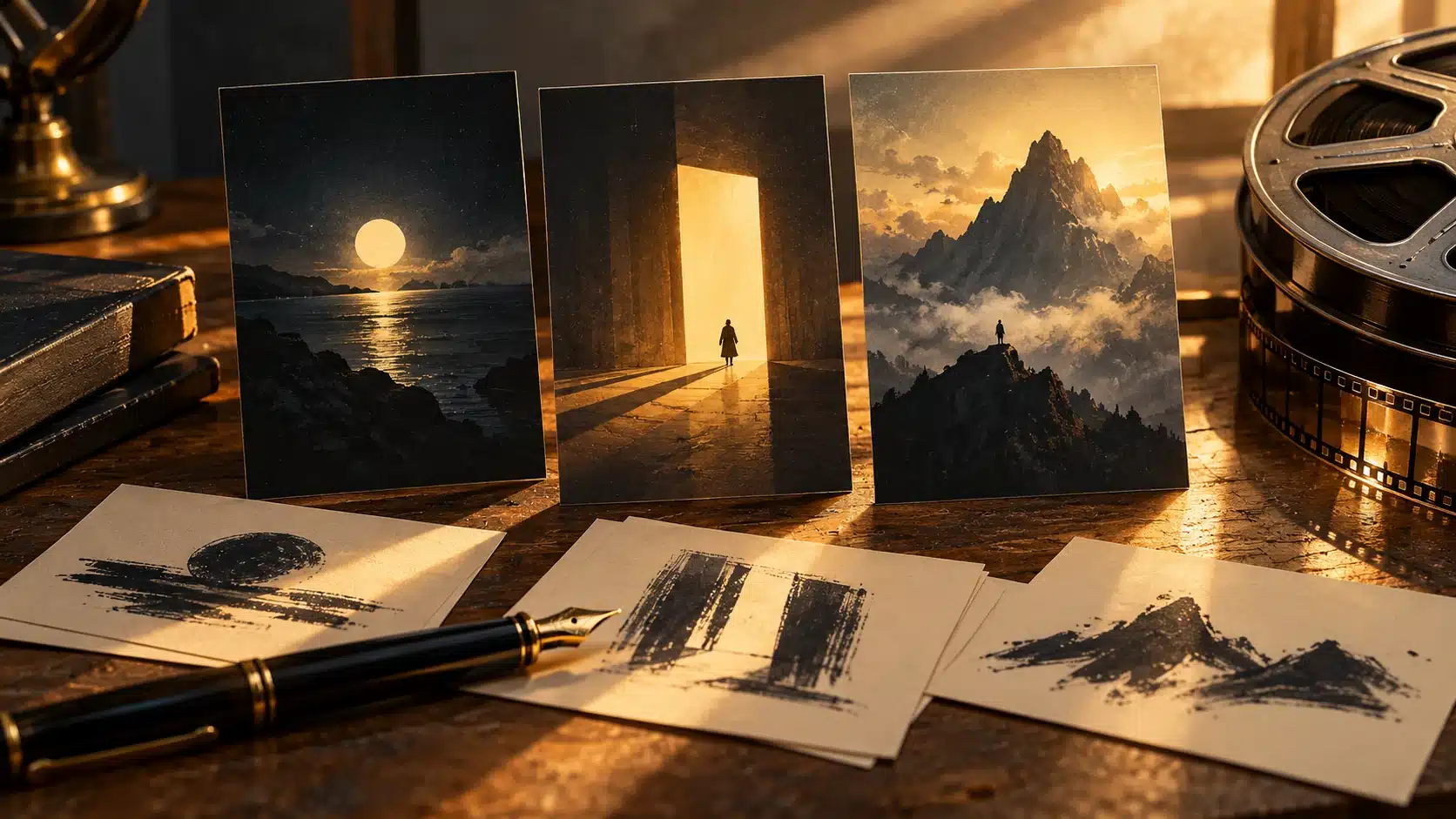
A logline normally needs enough story information for a reader to understand the central situation. A tagline can withhold that information if the title and artwork provide the necessary context. On a poster, the image may identify the monster, the couple or the setting while the words supply the emotional question.
Try reading the line without its artwork, then with it. If the words merely repeat the visible image, they may be using valuable space without adding a reason to care. If they make sense only after a full plot explanation, they may be too obscure for the intended audience. The right amount of mystery depends on where the line appears and what the viewer already knows.
Four approaches to test on the same premise
- Promise: name the kind of experience the film offers, while avoiding generic praise.
- Contradiction: place two ideas together that create a specific tension.
- Question or invitation: give the audience a reason to enter the world, without asking a question with an obvious uninteresting answer.
- Character pressure: suggest the choice or cost at the heart of the story without reciting the whole plot.
Do not assign one formula rigidly to each genre. A comedy can use a serious-sounding line that becomes funny beside the image. A thriller can be quiet. What matters is whether the combined campaign gives an honest expectation of the film.
Revise for specificity and presentation
In a fictional first draft, “An unforgettable night changes everything” could describe hundreds of films. Identify what makes this night different: the setting, deadline, relationship or impossible choice. Then remove information the title or image already supplies. A shorter line is useful only if the remaining words still communicate something particular.
Check the line as an actual title treatment. Read it at a small poster thumbnail size and on the intended trailer end card. Decide where a line break falls; an accidental break can change emphasis or separate words that need to be read together. Keep a plain-text approved version so layout changes do not silently alter punctuation or wording.
Write your own: a worked fictional example
Suppose a fictional short film, Last Light, follows a night-shift projectionist who discovers an unfinished recording from her late father and must decide whether to play it before the cinema closes. That sentence is a premise summary; the tagline can focus on a feeling or tension rather than retelling it.
| Original draft | Editorial assessment |
|---|---|
| One last show. One unfinished goodbye. | Connects the cinema setting with emotional closure. It suits a quiet drama if the film delivers that tone. |
| Tonight, the screen remembers. | More mysterious and concise, but could suggest a supernatural story. Use it only if that implication fits. |
| Before the lights go out, listen. | Creates urgency and a sound-related promise; it may overstate danger for a gentle film. |
All three lines and the film premise are invented for this exercise. Check for conflicts before using any line in a real release.
A practical revision process
- Write the intended audience, genre and emotional promise in one sentence.
- Draft several approaches: a tension, a contrast, an invitation or a character problem.
- Remove generic praise such as “an unforgettable journey” unless the remaining words become more specific.
- Read the line beside the actual title and poster. Look for repetition, accidental spoilers and a misleading genre signal.
- Ask a few readers what kind of film they expect, without explaining the plot first. Record the responses rather than declaring a winner from personal preference.
- Keep the selected wording, version date and approval record with the film’s marketing files.
Give the line a useful destination
The tagline should support a poster, trailer or screening page that provides the practical information the viewer needs. It does not replace a synopsis, accessibility information, credits or booking details.
Use indirect characterization to sharpen the story beneath the campaign, a sizzle reel for a broader pitch, and the theater-screening checklist for an actual event. Keep the final campaign wording consistent across the poster, trailer and event page.
For related film-reference work, the Batman actor chronology shows why a name needs a defined role and release context, while the movie-prop design guide separates documented objects from visual interpretation. Use the same care when attributing campaign copy.