A 4×6 photo measures 4 x 6 inches (10.16 x 15.24 cm, usually rounded to 10 x 15 cm). At 300 DPI — the standard for sharp prints — that is 1200 x 1800 pixels. A 4×6 has a 3:2 aspect ratio, the same shape most DSLR and mirrorless cameras capture, which is why 4×6 is the default size for everyday prints.
This guide covers every 4×6 measurement — inches, centimeters, millimeters, and pixels at each common resolution — plus how 4×6 compares to other print sizes, how to crop your photos to fit, and how to print sharp 4x6s at home. It is the most popular photo size in the world, so here is exactly what every measurement means.
4×6 Photo Size at a Glance
| Measurement | 4×6 photo size |
|---|---|
| Inches | 4 x 6 in |
| Centimeters | 10.16 x 15.24 cm (≈ 10 x 15 cm) |
| Millimeters | 101.6 x 152.4 mm |
| Aspect ratio | 3:2 (long side is 1.5 times the short side) |
| Pixels at 300 DPI (print standard) | 1200 x 1800 px |
| Area | 24 square inches |
Those are the numbers most people need; the rest of this page explains each one.
What Does “4×6” Mean?

The two numbers in “4×6” are the print’s dimensions in inches: 4 inches on the short side and 6 inches on the long side. By convention the width is written first, so “4×6” describes a portrait (upright) print, while the same print turned on its side is called “6×4” (landscape). It is the same piece of paper either way — only the orientation changes.
Because the long side (6 in) is 1.5 times the short side (4 in), a 4×6 has a 3:2 aspect ratio. That is the same ratio 35mm film used, and the same ratio most DSLR and mirrorless cameras capture today. A photo straight out of one of those cameras fits a 4×6 with no cropping at all — one reason 4×6 became the standard snapshot size.
4×6 Photo Dimensions in Pixels

A digital image has no fixed physical size — its pixel dimensions only become a “4×6” once you choose a resolution, measured in DPI (dots per inch) or the near-identical PPI (pixels per inch). Multiply each side in inches by the DPI to get the pixel count:
| Resolution | 4×6 in pixels | Best for |
|---|---|---|
| 72 DPI | 288 x 432 px | Screens and web only — too low to print |
| 150 DPI | 600 x 900 px | Draft prints, flyers, low-cost lab prints |
| 300 DPI | 1200 x 1800 px | Standard high-quality photo prints |
| 600 DPI | 2400 x 3600 px | Maximum detail; rarely needed at this size |
For almost every print, aim for 300 DPI, or 1200 x 1800 pixels. That is enough detail for crisp, high-quality 4x6s, and going higher makes the file larger without a visible improvement. If your image is smaller than 1200 x 1800, it can still print, but fine detail may look soft — so start with the highest-resolution version of your photo you have.
4×6 Photo Size in cm and mm
Converted exactly, a 4×6-inch photo is 10.16 x 15.24 cm (101.6 x 152.4 mm). In most of the world outside the US, this print is sold as 10 x 15 cm — the international standard photo size. The 10 x 15 cm print is fractionally smaller than an exact inch conversion, but it shares the same 3:2 aspect ratio, so the two are used interchangeably. If you order “10×15” prints abroad, you are getting a 4×6.
Comparing 4×6 to Other Print Sizes
Seeing 4×6 next to other standard sizes makes it easy to pick the right print for the job. Note how the aspect ratio changes — that is what determines how much of your photo you keep or crop when you size up.
| Size (in) | Centimeters | Aspect ratio | Typical use |
|---|---|---|---|
| 4 x 6 | 10 x 15 cm | 3:2 | Everyday snapshots, albums |
| 5 x 7 | 13 x 18 cm | 7:5 | Portraits, greeting cards |
| 8 x 10 | 20 x 25 cm | 5:4 | Framed portraits, desk prints |
| 8.5 x 11 | 22 x 28 cm | ~11:8.5 | Letter-size documents, flyers |
| 11 x 14 | 28 x 36 cm | 14:11 | Wall art, matted prints |
| 16 x 20 | 41 x 51 cm | 5:4 | Statement wall prints |
4×6 is the smallest of the standard sizes and the only one that matches a camera’s native 3:2 shape. Every larger size has a squarer ratio, which means a full-frame photo has to be cropped to fit — something to keep in mind before you enlarge. Whatever size you land on, the finish changes the final look too — see our guide to glossy vs matte prints.
4×6 vs 5×7: What’s the Difference?
A 5×7 (13 x 18 cm, 7:5 ratio) is larger and slightly squarer than a 4×6 (10 x 15 cm, 3:2). Because a 5×7 is not 3:2, a full-frame camera photo has to be cropped a little to fit it, whereas it fills a 4×6 with no cropping. Choose 4×6 for everyday snapshots and albums, and 5×7 for framed portraits and greeting cards.
How to Crop a Photo to 4×6
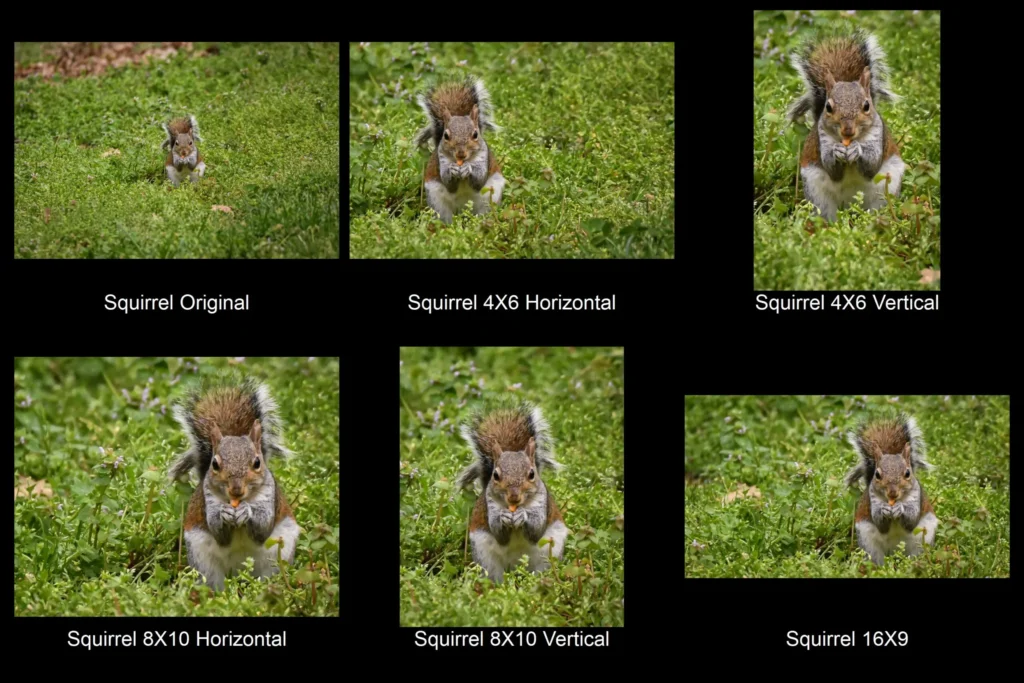
If your photo already came from a DSLR or mirrorless camera, it is likely 3:2 and will fit a 4×6 with no cropping. Photos from phones are usually 4:3 (a bit squarer), so they need a small crop to fit. Here is how to do it cleanly:
- Set your editor’s crop tool to a fixed 3:2 (or 2:3 for portrait) aspect ratio so the frame stays locked to 4×6 proportions.
- Match the crop orientation to the print: wider-than-tall for a 6×4 landscape print, taller-than-wide for a 4×6 portrait print.
- Position the frame so you are not cutting off heads, hands, or important edges. Zoom out if the subject does not fit.
- Crop first, then export — cropping a photo you have already downsized throws away detail you cannot get back.
- Confirm the final file is at least 1200 x 1800 pixels so it prints sharp at 300 DPI.
How to Print Sharp 4×6 Photos at Home
- Use real photo paper. Choose 4×6 photo paper with a glossy or luster finish; plain copy paper will look dull and muddy.
- Select the 4×6 preset. Most photo printers have a built-in 4×6 (10 x 15 cm) setting that handles scaling and borderless printing automatically.
- Print at 300 DPI. It is the sweet spot for this size.
- Brighten slightly. Home prints often come out a touch darker than they look on screen, so nudge exposure up before printing.
- Check the finished size. Measure a test print to confirm it is a true 4 x 6 inches and that your paper-size setting matches the media loaded.
When 4×6 Is the Right Size — and When to Go Bigger
4×6 is hard to beat for everyday photos: it is affordable to print in batches, fits standard frames and albums, slips into a wallet or greeting card, and needs no cropping from a 3:2 camera. It is the natural choice for snapshots, event photo booths, scrapbooks, and photo gifts.
Step up to a larger size when the image deserves more presence or detail — a 5×7 or 8×10 for a framed portrait, and an 11×14 or 16×20 for wall art or sweeping landscape shots. Weigh the subject, where it will hang, and how close people will view it. As a rule: bigger prints reward higher-resolution files and lose their impact if the source image is small or soft.
4×6 Photo Size FAQ
What is the aspect ratio of a 4×6 photo?
A 4×6 has a 3:2 aspect ratio — the long side is 1.5 times the short side. This matches 35mm film and most DSLR and mirrorless sensors, so those photos fit a 4×6 without cropping.
How big is a 4×6 photo in pixels?
At the 300 DPI print standard, a 4×6 is 1200 x 1800 pixels. At 150 DPI it is 600 x 900 pixels, and at 72 DPI (screen only) it is 288 x 432 pixels.
What is a 4×6 photo in cm?
Exactly, 10.16 x 15.24 cm. It is sold internationally as a 10 x 15 cm print, which shares the same 3:2 ratio.
Are 4×6 and 6×4 photos the same?
Yes — it is the same print. “4×6” describes it in portrait orientation and “6×4” in landscape; only the rotation differs.
What DPI should a 4×6 photo be?
300 DPI for a high-quality print, which equals 1200 x 1800 pixels. 150 DPI is acceptable for draft or budget prints.
How many 4×6 photos fit on an 8.5 x 11 sheet?
On a standard 8.5 x 11-inch sheet, two 4×6 photos fit easily side by side, and up to three fit if you rotate and arrange them tightly. Two is the usual choice for home printing because it leaves generous room for trimming.
Can I print a 4×6 on any photo paper?
Yes, as long as the paper is at least 4×6. Set your printer to the 4×6 (10 x 15 cm) paper size so the image scales correctly.
The Bottom Line on 4×6 Photo Size
A 4×6 photo is 4 x 6 inches — 10 x 15 cm, or 1200 x 1800 pixels at 300 DPI — with a 3:2 aspect ratio that matches how most cameras shoot. That combination of standard shape, low cost, and easy handling is why 4×6 has stayed the world’s default photo size for decades. Save the table above and you will have every 4×6 measurement on hand the next time you print, crop, or order photos.