By Matteo Martignago, cinematographer and colorist. Updated November 2026.
Some links below are affiliate links. As an Amazon Associate, Artistic Hive earns from qualifying purchases, at no additional cost to you.
The best point-and-shoot or compact camera with a viewfinder in 2026 is the Fujifilm X100VI, thanks to its switchable optical and electronic finder. Just know the wider category is scarce and pricey right now: a few of the best options are sold new, and others are worth buying used.
A viewfinder changes how a camera feels to shoot. Holding it to your eye steadies the camera, cuts glare so you can see in bright sun, and slows you down for more deliberate composition. The trouble is that most compacts dropped their finders years ago, so the point-and-shoot cameras with a viewfinder still worth buying in 2026 are worth seeking out. We read “point-and-shoot” broadly here to mean any fixed-lens camera you can slip in a bag, from a 449 dollar travel zoom to a full-frame Leica, and every pick had to be a fixed-lens compact with a real, verified viewfinder and confirmed 2026 availability. Below are the models that made the cut, what kind of finder each one uses, and how to choose between them.
Quick picks
- Best overall: Fujifilm X100VI, a hybrid optical and electronic finder no rival matches, the reason it heads nearly every roundup.
- Best pocket zoom: Sony RX100 VII, 24-200mm reach with a pop-up finder in a true pocket body.
- Best premium large-sensor zoom: Leica D-Lux 8, Leica’s version of the Four Thirds zoom compact, with a 2.36M-dot finder.
- Best value large-sensor zoom: Panasonic LUMIX L10, new for 2026, with a GH7-class Four Thirds sensor, a Leica 24-75mm f/1.7-2.8 zoom and an OLED finder for $1,499.99.
- Best full-frame: Leica Q3, a 60MP full-frame sensor and a 5.76M-dot electronic finder, price no object.
- Best budget travel zoom: Panasonic LUMIX ZS80, a built-in finder plus 30x reach, while stock lasts.
- Cheapest new finder: Fujifilm X half, a 1-inch sensor and an optical finder for $449.
- Best used value: Panasonic LUMIX LX100 II, a large-sensor zoom compact with dials and a finder, if you would rather buy used than pay for the new L10.
Compact and point-and-shoot cameras with a viewfinder, compared
| Camera | Sensor | Viewfinder | Lens / zoom | Best for | Availability | Amazon price |
|---|---|---|---|---|---|---|
| Fujifilm X100VI | APS-C, 40MP | Hybrid optical and electronic | 23mm f/2 prime (35mm equivalent) | Best overall | In production | $2,108 |
| Sony RX100 VII | 1-inch, 20MP | Pop-up electronic | 24-200mm f/2.8-4.5 zoom | Best pocket zoom | In production, last of the line | $1,498 |
| Leica D-Lux 8 | Four Thirds, 17MP | Built-in electronic (2.36M-dot) | 24-75mm f/1.7-2.8 zoom | Best premium large-sensor zoom | In production | $2,390 |
| Panasonic LUMIX L10 | Four Thirds, 20.4MP | Built-in electronic (2.36M-dot OLED) | 24-75mm f/1.7-2.8 zoom | Best value large-sensor zoom | New in 2026 | $1,500 |
| Leica Q3 | Full-frame, 60MP | Built-in electronic (5.76M-dot) | 28mm f/1.7, or 43mm f/2 on the Q3 43 | Best full-frame | In production | $6,693 |
| Sony RX100 VA | 1-inch, 20MP | Pop-up electronic (2.36M-dot) | 24-70mm f/1.8-2.8 zoom | Brighter-lens pocket zoom | Sold new | $1,731 |
| Fujifilm X half | 1-inch, 17.7MP | Built-in optical (vertical) | 32mm-equivalent f/2.8 prime | Cheapest new finder | In production | $449 |
| Panasonic LUMIX LX100 II | Four Thirds, 17MP | Built-in electronic (field-sequential) | 24-75mm f/1.7-2.8 zoom | Best used value | Discontinued, replaced by the L10 | Other sellers only |
| Panasonic LUMIX ZS80 | 1/2.3-inch, 20MP | Pop-up electronic (small) | 24-720mm f/3.3-6.4 zoom (30x) | Best budget travel zoom | Clearance | Other sellers only |
| Sony Cyber-shot HX99 | 1/2.3-inch, 18MP | Pop-up electronic (small) | 24-720mm f/3.5-6.4 zoom (28x) | Smallest superzoom with a finder | Discontinued, used only | Other sellers only |
Prices move quickly in this category, especially for the discontinued models on the used market, so check current listings before you buy.
The best cameras with a viewfinder in detail
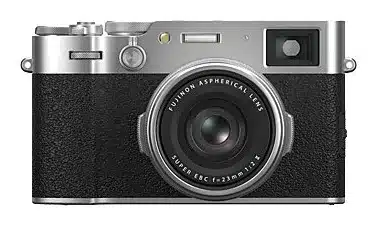
1. Fujifilm X100VI
Best overall. Hybrid optical and electronic viewfinder, 23mm f/2 prime (35mm equivalent).
The X100VI is the camera the whole category revolves around, and its viewfinder is why. Flick a lever and you switch between a real optical rangefinder-style window, complete with a digital overlay, and a bright 3.69M-dot electronic finder, so you get the clarity of an OVF and the accuracy of an EVF in one body. The 40MP APS-C sensor, the fixed 35mm-equivalent lens, and Fujifilm’s film simulations make it an excellent everyday, street, and travel camera.
The catch: It has one focal length and no zoom, and after going viral it can still be hard to buy at list price.
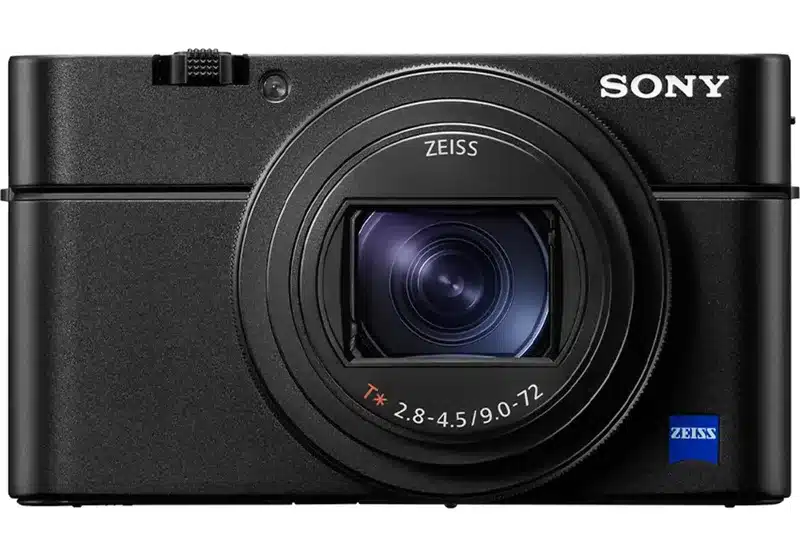
2. Sony RX100 VII
Best pocket zoom. Pop-up electronic viewfinder, 24-200mm f/2.8-4.5 zoom.
The RX100 VII is the most versatile camera here that still fits in a jacket pocket. A pop-up electronic finder tucks into the body until you need it, and the 24-200mm zoom covers everything from wide scenes to distant subjects with fast, sticky autofocus carried down from Sony’s sports cameras. Sony quietly cut the US price by about 200 dollars in 2026. If it stretches your budget, the brighter RX100 VA below is still sold new, and the earlier RX100 III and VI share the same pop-up finder and 1-inch sensor for less on the used market.
The catch: The 1-inch sensor trails the larger-sensor picks in low light, and this is the final RX100; no successor is coming.
3. Leica D-Lux 8
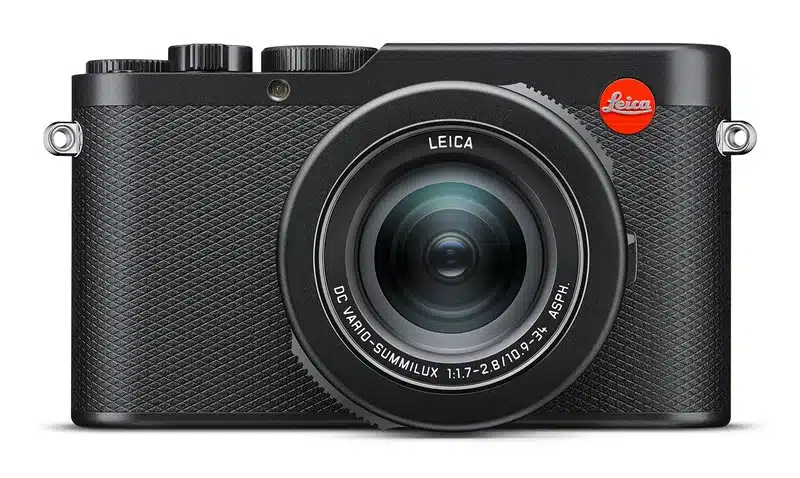
Best new large-sensor compact. Built-in electronic (2.36M-dot) viewfinder, 24-75mm f/1.7-2.8 zoom.
If you want a new large-sensor zoom compact with a proper eye-level finder, the D-Lux 8 is essentially the only one left on shelves. The built-in 2.36M-dot electronic viewfinder is a real upgrade over the older field-sequential design, the Four Thirds sensor is far bigger than a phone’s, and the bright 24-75mm zoom plus Leica’s pared-back interface make it a pleasure to shoot.
The catch: You pay a Leica premium for Panasonic-derived hardware, 17 megapixels is modest by 2026 standards, and tariffs have pushed the US price above 1,900 dollars.
4. Panasonic LUMIX L10
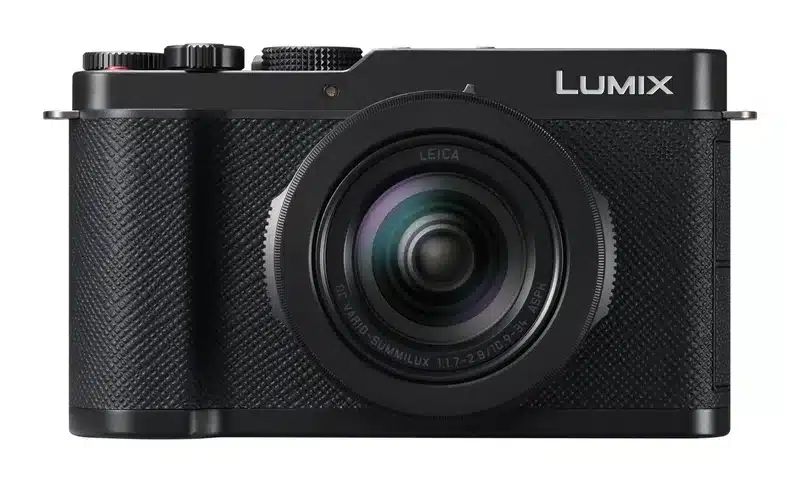
Best value large-sensor zoom. Built-in electronic (2.36M-dot OLED) viewfinder, 24-75mm f/1.7-2.8 zoom.
The LUMIX L10 is the LX100 II’s long-awaited successor, launched in May 2026 at $1,499.99. It pairs a 20.4MP Four Thirds sensor, the same one Panasonic uses in the GH7, with a Leica DC Vario-Summilux 24-75mm f/1.7-2.8 zoom, and it fixes the LX100 II’s weakest point with a 0.39-inch, 2.36M-dot OLED finder at 0.74x magnification. Subject-recognition autofocus, 5.6K video and up to 30 frames per second with the electronic shutter make it far more capable than the camera it replaces.
The catch: at 508g with battery and card it is heavier than the LX100 II. It costs roughly $900 less than the Leica D-Lux 8 on Amazon, but it is still a $1,500 camera.
5. Leica Q3
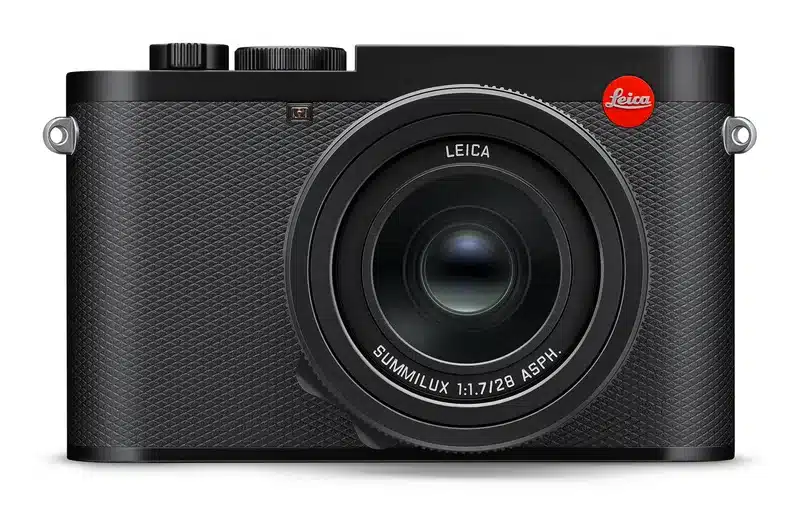
Best full-frame. Built-in electronic (5.76M-dot) viewfinder, 28mm f/1.7, or 43mm f/2 on the Q3 43.
The Leica Q3 is the no-compromise fixed-lens compact: a 60MP full-frame sensor, a stabilized 28mm f/1.7 Summilux lens, and a 5.76M-dot electronic finder in a body you can carry all day. In-camera crop framelines let you frame at 35, 50, or 75mm without changing lenses. Prefer a normal perspective? The Q3 43 is the same camera with a 43mm f/2 APO lens.
The catch: The price is luxury-tier, and a single fixed focal length asks you to zoom with your feet.
Also new: Sony’s RX1R III (July 2025) puts a 61MP full-frame sensor and a Zeiss 35mm f/2 lens in a smaller body with a built-in 2.36M-dot electronic finder, for $5,098 on Amazon (November 2, 2026). Its finder is lower in resolution than the Q3’s, and it has no image stabilization.
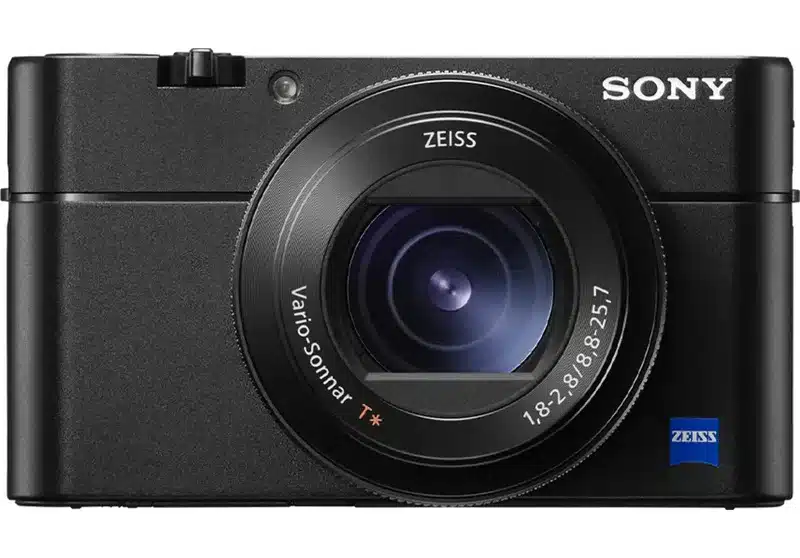
6. Sony RX100 VA
Brighter-lens pocket zoom. Pop-up electronic (2.36M-dot) viewfinder, 24-70mm f/1.8-2.8 zoom.
The RX100 VA is the brighter-lens alternative to the RX100 VII. Its 24-70mm f/1.8-2.8 zoom gives up the VII’s long end but gathers more light at every focal length, which helps indoors and at night, and the same 0.39-inch, 2.36M-dot OLED finder pops up from the top plate when you need it. The 20MP stacked 1-inch sensor, 315-point phase-detection autofocus, and bursts of up to 24 frames per second make it quick for street and travel shooting, and the screen tilts up 180 degrees for selfies.
The catch: 70mm is the longest the lens goes, so it cannot reach distant subjects like the VII, and there is no microphone input for video. It also costs more than the RX100 VII on Amazon right now ($1,731 against $1,498 on November 2, 2026), so buy it only if you need the brighter lens.
7. Fujifilm X half
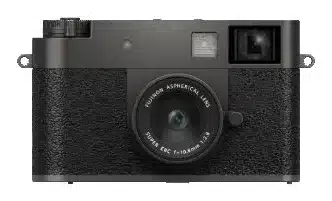
Cheapest new camera with a real viewfinder. Built-in optical viewfinder (vertical), 32mm-equivalent f/2.8 prime.
The Fujifilm X half is a small, film-inspired digital compact with a 1-inch, 17.7MP sensor and a fixed 10.8mm f/2.8 lens (32mm equivalent). Its optical finder is shaped for vertical framing, matching the camera’s portrait-format, half-frame-style pictures, and Fujifilm’s film simulations are built in. It launched in May 2025 at $849 and costs $449 on Amazon today (November 2, 2026).
The catch: an optical window doesn’t preview your exposure the way an electronic finder does, and the vertical-first design and small 2.4-inch screen make it a fun second camera rather than a do-everything compact.
8. Panasonic LUMIX LX100 II
Best used value. Built-in electronic (field-sequential) viewfinder, 24-75mm f/1.7-2.8 zoom.
The LX100 II is the value route into a large-sensor zoom compact with a built-in finder and real tactile dials for aperture and shutter. It shares the D-Lux 8’s Four Thirds sensor and bright 24-75mm lens for roughly half the D-Lux 8’s used price. Its field-sequential finder can show faint rainbow artifacts on fast pans, and its 2026 successor, the LUMIX L10 above, fixes that with a 2.36M-dot OLED finder.
9. Panasonic LUMIX ZS80
Best budget travel zoom. Pop-up electronic (small) viewfinder, 24-720mm f/3.3-6.4 zoom (30x).
The ZS80, sold as the TZ95 outside North America, is the cheapest way to get a built-in finder together with enormous reach. A 30x zoom spans 24 to 720mm for travel, and a small pop-up electronic viewfinder lets you compose in bright sun. One crucial warning: its 2025 successor, the ZS99 or TZ99, removed the viewfinder, so buy remaining ZS80 stock, not the newer model. The 1-inch ZS300 (TZ300) that arrived in 2026 has no viewfinder either. The small 1/2.3-inch sensor and dim long end mean image quality drops in low light and at full zoom.
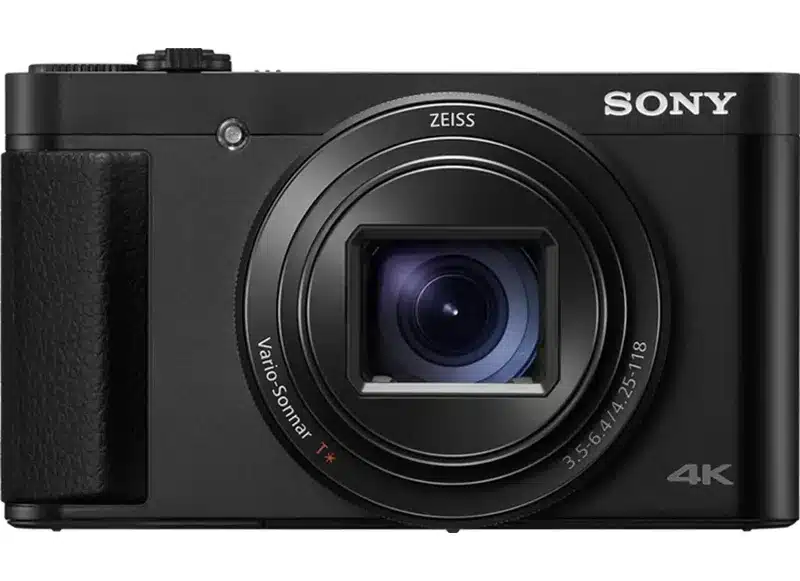
10. Sony Cyber-shot HX99
Smallest superzoom with a finder. Pop-up electronic (small) viewfinder, 24-720mm f/3.5-6.4 zoom (28x).
The HX99 is the smallest pocket superzoom that ever shipped with a built-in finder. It packs a 28x, 24-720mm zoom and a tiny pop-up electronic viewfinder into a body that disappears into a pocket, which is remarkable given how much reach it packs in. The finder and sensor are both small and basic, so treat this as a reach-in-your-pocket pick, not an image-quality one.
Two honest exceptions
Two popular cameras come up constantly in this category but do not quite fit. The Nikon COOLPIX P1100 has a built-in electronic finder and a staggering 24-3000mm zoom, but it is a large, DSLR-shaped bridge camera, not a pocket compact; choose it only if extreme reach matters more than size. The Ricoh GR IV and its sibling the GR IIIx are among the finest pocket APS-C street cameras made, but they have no built-in viewfinder at all. You can add a clip-on optical finder as a separate accessory, so include them on your shortlist only if you are willing to do that.
Why compacts with viewfinders are scarce and pricey in 2026
If this list feels short, that is the market, not the research. Camera makers killed off most of their enthusiast compacts between about 2020 and 2023, just before a “digicam renaissance” sent a wave of younger buyers looking for a real camera that is not a phone. Strong demand is now chasing a thin, aging supply.
The Fujifilm X100VI is the poster child for all of this: it went viral, sold out for roughly two years, and often traded above its 1,599 dollar list price, though restocks became more regular through 2026. Several other strong picks, including the Panasonic LX100 II and the Sony HX99, are discontinued and sold only used, at prices that have crept above their originals. The Sony RX100 VII is the last of its line with no successor planned. And there is a genuine trap at the budget end: Panasonic dropped the viewfinder from the ZS80’s successor, the ZS99, so the finder you are shopping for is on the outgoing model, not the newer one. The same goes for the 1-inch ZS300 (TZ300) launched in 2026, which drops the viewfinder its predecessor, the ZS200, had. The good news in 2026: Panasonic’s new LUMIX L10 kept a proper OLED finder, and Fujifilm’s X half added a cheap optical one.
How to choose
Optical, electronic, or hybrid viewfinder
An optical viewfinder shows the scene through glass, with no lag and no battery draw, but it does not show your exposure or focus. An electronic viewfinder is a tiny screen that previews the exact image the sensor will capture, including exposure, white balance, and focus, at the cost of a little battery life. The Fujifilm X100VI is the only camera here with a hybrid finder that does both. Also note whether a finder is always-ready or a pop-up: the Sony and Panasonic zoom compacts use pop-up electronic finders that retract into the body, which keeps them small but adds a step before you shoot.
Sensor size
Bigger sensors gather more light, which means cleaner images in the dark and more background blur. Full-frame in the Leica Q3 is the largest here, followed by APS-C in the X100VI, Four Thirds in the D-Lux 8 and LX100 II, then the 1-inch sensors in the Sony zooms, and finally the small 1/2.3-inch sensors in the budget superzooms. A larger sensor is the single biggest factor in image quality, so weigh it against reach and price.
Zoom range versus a fixed prime
The premium picks, the X100VI and the Leica Q3, use a single fixed focal length, which keeps the lens bright and sharp and the body slim, but asks you to move your feet to reframe. The zoom compacts trade a little image quality for flexibility, from the versatile 24-200mm on the RX100 VII to the enormous 24-720mm on the travel superzooms. Decide whether you value image quality and simplicity or reach and flexibility.
Buying new versus used
Several of the best cameras with a finder are now discontinued, so buying used is normal here rather than a compromise. Favor reputable sellers with a return window, ask for the actuation count if you can, and check that the lens is free of fungus and the pop-up finder mechanism works. A clean used LX100 II can be a far better buy than a new small-sensor camera at the same price. If you are still building your fundamentals, our beginner photography tips apply to any of these bodies.
What else you will need
A dedicated camera earns its keep with a few cheap extras. If you also shoot video or interviews, our guide to the best cameras for podcasting covers that side, and for after-dark shooting our night street photography guide pairs well with a pocketable camera and a finder.
- A fast UHS-II or V30 SD card so the camera can keep up with bursts and 4K video.
- A spare battery, since compacts and their small cells run down quickly.
- A protective or UV filter for the models that take one, to guard the front element.
- A small case to protect the body and a pop-up finder in a bag or pocket.
Frequently asked questions
Do they still make point-and-shoot cameras with a viewfinder in 2026?
Yes, but only a handful. The Fujifilm X100VI, Sony RX100 VII, Leica D-Lux 8, and Leica Q3 are still made new, and 2025 and 2026 added the Panasonic LUMIX L10, the Fujifilm X half and the Sony RX1R III. Several other good options, like the Panasonic LX100 II and Sony HX99, are discontinued and sold only on the used market.
What is the best point-and-shoot camera with a viewfinder?
The Fujifilm X100VI, thanks to its switchable optical and electronic finder, large APS-C sensor, and excellent fixed 35mm-equivalent lens. If you want a zoom instead, the Sony RX100 VII is the best pocketable choice.
What is the difference between an optical and electronic viewfinder, and which is better?
An optical finder shows the scene through glass with no lag or battery use, but it cannot show your exposure or focus. An electronic finder previews the exact captured image, including exposure and white balance, using a tiny screen. Neither is strictly better: optical feels more immediate, electronic is more accurate. The X100VI offers both.
Does the Fujifilm X100VI have an optical viewfinder, and what is a hybrid finder?
Yes, the X100VI has a real optical viewfinder, plus an electronic one. A hybrid finder combines both in one eyepiece: you look through an optical window with a small digital overlay, then flip a lever to switch to a full electronic preview. Only the Fujifilm X100 series offers this.
Is it better to use a viewfinder or the LCD screen?
A viewfinder cuts through glare in bright sun, steadies the camera against your face, and helps you concentrate on the frame. The LCD is better for awkward angles, video, and quick snapshots. Most cameras here let you use either, so it comes down to the situation.
Is a camera with a viewfinder worth it, and do professionals use one?
For most people, yes. A finder steadies the camera, beats glare, and makes composing more deliberate. Professionals use viewfinders constantly, but it is a preference rather than a strict necessity, so if you shoot mostly at arm’s length on the LCD, you may not miss one.
Why is it so hard to find a compact camera with a viewfinder in 2026?
Makers cut most enthusiast compacts just before demand surged, so the survivors sell out and many good models are now used-only at inflated prices. The section above explains the market in full.
Are there any cheap or budget cameras with a viewfinder?
Yes. The Fujifilm X half ($449 on Amazon) is the cheapest new camera with a built-in finder, an optical one. For zoom, the Panasonic ZS80, sold as the TZ95, pairs a small electronic finder with a 30x zoom while stock lasts, and a used Sony HX99 is even smaller. Just avoid the ZS99 and the new ZS300, which have no viewfinder. Steer clear of the sub-200-dollar no-name retro cameras that advertise a finder too; their tiny sensors and plastic finders are not worth it.
What is the best compact camera with a viewfinder for travel?
For maximum flexibility in a pocket, the Sony RX100 VII and its 24-200mm zoom. For the best image quality in a still-portable body, the Panasonic LUMIX L10 or the Leica D-Lux 8. For the cheapest reach, the Panasonic ZS80.
The bottom line
A viewfinder is worth hunting for, and in 2026 that hunt is real. If money is no object, the Leica Q3 is among the finest fixed-lens compacts made. For most people the Fujifilm X100VI is the one to want, with the best finder of the group, while the Sony RX100 VII is the most practical pocket zoom. On a budget, the Fujifilm X half, the Panasonic LUMIX ZS80 or a clean used LX100 II gets you a real eyepiece without the premium, and the new LUMIX L10 is the best value if you want a large sensor and a zoom. Match the finder, the sensor, and the reach to how you shoot, and buy sooner rather than later, because these are getting harder to find, not easier.