By Matteo Martignago, cinematographer and colorist. Updated July 2026.
CGI stands for Computer-Generated Imagery: digitally created still or moving images made with computer graphics software. In film and television, CGI usually means the 3D computer graphics used to build the characters, creatures, environments, and effects that would be impossible, dangerous, or too expensive to shoot for real.
You will also see the letters CGI outside of film. They can mean Common Gateway Interface in web programming, or refer to CGI Inc., the IT company. This guide is about the film, animation, and photography meaning.
I am a cinematographer and colorist, not a VFX artist, but I work alongside them on set and in the color grade, matching real footage to computer-generated shots. So this is written from that production-side view, not from inside the render farm.
Understanding CGI: Definition and Application
CGI stands for Computer-Generated Imagery, a term that captures the wide array of digital graphics used to create or enhance images in art and visual media. It’s a critical tool for filmmakers, video game designers, and artists who construct scenes or effects that would be impossible to capture on film traditionally.
These graphics can make fantastical worlds come alive, add depth to stories through convincing special effects, or even age an actor with convincing realism. They’re also employed in creating virtual reality experiences and complex simulations for training and education purposes.
In addition to entertainment, CGI has practical applications in science and medicine where it aids in visualizing complex data sets. Architects use it to produce detailed renderings of buildings long before construction starts.
It allows engineers to simulate product performance under various conditions without building costly prototypes. The versatility of CGI opens up endless possibilities across industries by enabling professionals to visualize concepts vividly before they become tangible products or realities.
Evolution of CGI in Movies and Animation
CGI’s place in entertainment grew over decades. The milestones of CGI run through cinematic history, from subtle early appearances to pivotal roles in storytelling.
Early examples like “Westworld” in 1973 toyed with computer graphics to depict a robotic character’s point of view, but it wasn’t until films such as 1982’s “Tron” that audiences truly witnessed the potential of CGI as both environment and character were digitally crafted.
As technology progressed, so did the ambition of filmmakers. The explosive success of “Jurassic Park” in 1993 showed that dinosaurs could walk again using state-of-the-art computer animation, blurring the lines between reality and fiction for viewers worldwide.
This era marked a turning point; animators now had tools at their disposal to create worlds limited only by their imagination. Meanwhile, Pixar’s release of “Toy Story” in 1995 established CGI not just as a support act but as a star capable of carrying an entire feature film through its animated characters and detailed environments.
In recent years, spectacles such as “Avatar” have showcased how far CGI can push visual boundaries by immersing moviegoers into lush alien landscapes with unprecedented depth and realism.
Today’s movies frequently use complex simulations for weather effects or massive battle scenes, integrating lifelike digital doubles alongside human actors. Animators keep refining techniques like performance capture, which translates even subtle facial expressions onto digital creations, making them more relatable than ever before.
With each passing year, new achievements in this domain hint at an exciting future where perhaps soon we’ll find it hard to discern whether what we see on screen was born from pixels or physical reality.
Notable Examples of CGI in Movies
From epic battles in “The Lord of the Rings” trilogy to the alien landscapes of “Avatar,” CGI has expanded what movies can show. The examples below trace its impact on modern filmmaking.
Interstellar (2014)
Interstellar (2014) pushed CGI into new territory. The film combined computer-generated imagery with practical effects to build scenes set in the vast expanse of space and on otherworldly landscapes.
Audiences were treated to realistic renditions of black holes and distant galaxies, all thanks to the power of advanced CGI techniques.
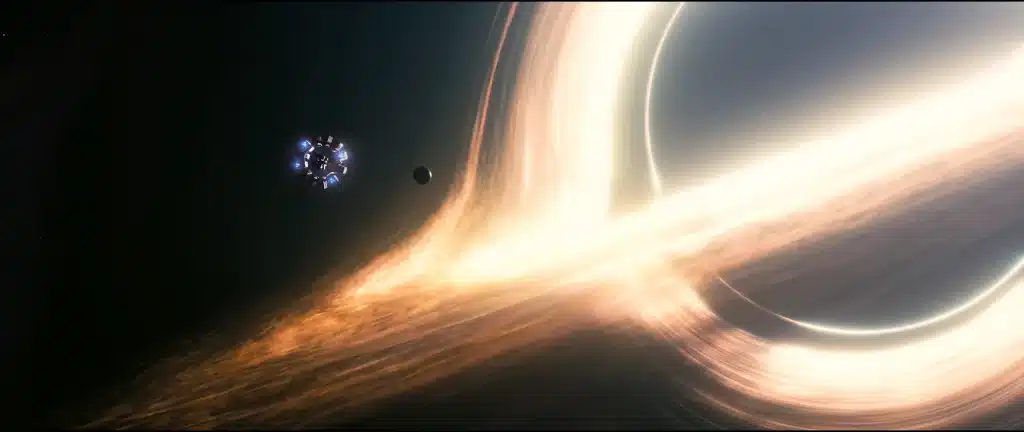
Director Christopher Nolan’s vision for Interstellar called for a meticulous depiction of scientific phenomena like gravity and time dilation, which was achieved through state-of-the-art CGI.
This visual storytelling set a new bar for science fiction movies and showed how digital effects can blend with live-action footage to produce stories that stay with you long after you leave the theater.
Jurassic Park (1993)
Jurassic Park (1993) set a new standard for realistic creatures on screen. Most of the dinosaurs’ screen time actually used Stan Winston’s animatronics for close contact with the actors, with ILM’s CGI reserved for full-body and moving shots, which makes the film the landmark example of animatronics and CGI working as a hybrid. The film’s innovative use of CGI changed how filmmakers approached imaginary creatures, showing the technology’s potential to bring them to life on the big screen.
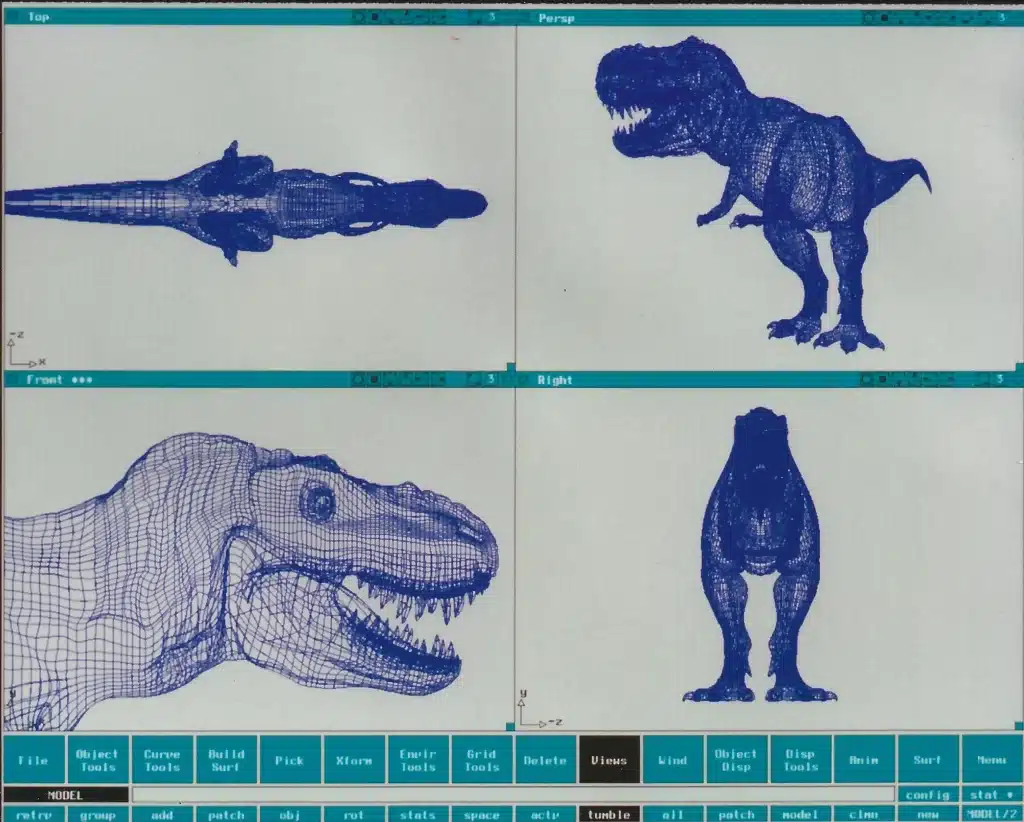
This ground-breaking achievement solidified Jurassic Park as an iconic example of how CGI can enhance storytelling and transport audiences into fictional worlds, contributing significantly to its massive success at the box office.
The integration of CGI in Jurassic Park held audiences and shaped the visual-effects work that followed. The film confirmed CGI as a powerful tool in filmmaking and opened an era where computer-generated imagery became fundamental to immersive cinema.
Avatar (2009)
“Avatar” (2009) raised the bar for visual effects and immersive storytelling. The film used CGI technology to bring to life the lush and exotic landscapes of Pandora, along with its indigenous creatures and Na’vi characters.

Through its use of CGI, “Avatar” drew audiences in and set new standards for cinematic experiences, showing how immersive visual storytelling could be with modern technology.
“Avatar” was not just a box office success; it earned numerous awards for its visual effects, underlining the impact of CGI on modern filmmaking.
The Matrix (1999)
Pushing the boundaries of computer-generated imagery and visual effects in cinema, The Matrix (1999) utilized CGI to create groundbreaking action and fight scenes. This use of CGI helped advance the capabilities of computer-generated imagery in filmmaking and positioned The Matrix as a pioneer of visually striking, inventive sequences.

By showcasing the potential of CGI in crafting realistic and immersive virtual environments, The Matrix’s impact on the filmmaking industry continues to influence future use of computer-generated imagery in movies.
The film’s use of CGI has left a lasting impression on how filmmakers approach visual effects, setting new standards for incorporating technology into storytelling while shaping audience expectations for cinematic experiences.
Titanic (1997)
The film “Titanic” utilized CGI to recreate the sinking of the iconic ship and to depict its grandeur. The computer-generated imagery, known as CGI, played a pivotal role in crafting realistic visual effects for the movie.
By using CGI, “Titanic” set a new standard for visual effects in filmmaking and showcased the potential of computer-generated imagery in producing lifelike scenes. It was instrumental in portraying intricate details of the ship, the ocean environment, and the dramatic sequences.

The film’s use of CGI transported viewers back in time and immersed them in the tragic story of the Titanic. Through groundbreaking visual effects, “Titanic” highlighted how CGI can enhance historical storytelling and recreate monumental events on screen.
The Lord of the Rings trilogy (2001–2003)
The Lord of the Rings trilogy (2001–2003) used CGI to bring to life its fantastical world and characters. The work blended animated characters like Gollum with the live-action footage, creating a vivid, immersive experience for audiences.

With meticulous attention to detail, specific uses of CGI in the movies encompassed 3D motion capture, elaborate battle scenes, and realistic rendering of fur and hair on various creatures.
In this iconic trilogy, filmmakers expertly balanced the use of CGI with practical effects to enhance storytelling while staying true to the tone envisioned by director Peter Jackson.
Terminator 2: Judgment Day (1991)
Terminator 2: Judgment Day (1991) transformed the use of CGI in movies with its visual effects. The film’s iconic T-1000 character, built with precise CGI, set new industry standards and showed the potential of computer-generated imagery for lifelike characters.

Using CGI, Terminator 2 created realistic liquid metal effects for the T-1000, contributing to its success and leaving a lasting impact on future advancements in visual effects technology.
The innovative application of CGI in Terminator 2 helped pave the way for lifelike, dynamic characters and environments in movies. This iconic film remains a prominent example of how CGI can be used effectively to enhance storytelling and create immersive cinematic experiences.
Transformers (2007)
Transformers (2007) leans on computer-generated imagery to build elaborate characters and action sequences. Relying heavily on CGI, the film pushes visual-effects shots further, adding larger-than-life elements to the story.
The robots were largely keyframe-animated by hand at ILM, with motion capture used only for subtle idling movement. Rendering gave the metal surfaces their weight and reflections across thousands of individually animated mechanical parts.

The film’s use of CGI reflects how the technology has advanced, blending real actors with computer-generated elements to deliver a visually immersive experience.
Transformers (2007) is a clear example of how CGI can bring fantastical elements to life on screen and hold an audience with sheer visual scale. It shows what computer-generated imagery can do in modern filmmaking, joining real-world settings with digital creations that would be impossible to shoot.
CGI Process Explained
The CGI pipeline runs in a set order: modeling, texturing, rigging, animation, simulation, lighting, rendering, and compositing. Each stage builds on the one before it.
Modeling
CGI modeling involves creating digital 3D models of characters, objects, and environments using specialized software. These realistic models serve as the foundation for CGI animation in movies and games.
By manipulating polygons, edges, and vertices, artists can sculpt intricate and detailed virtual representations. Fractal algorithms are utilized to generate natural landscapes with high levels of detail.
Skeletal animation uses computer-generated models for medical and scientific work, such as simulating human movement or analyzing anatomical structures. The same imagery is used to digitally reconstruct historical buildings from their ruins.
Texturing
After CGI modeling, the next step in the process is texturing. Texturing involves adding surface detail to 3D models to make them appear more realistic. This step adds depth and visual dimension, and it leans heavily on color to make surfaces read as skin, metal, or fabric.
Computer-generated cloth and skin images are used extensively in film, advertising, and fashion design. One of the challenges includes creating natural folds in digital clothing to mimic real-life movement and appearance.
Realistic computer-generated skin images require attention to photo realism, physical realism, and function realism. Fine features such as wrinkles and pores are modeled at a microscopic level to achieve authenticity.
Rigging
Before a model can move, artists give it a digital skeleton of bones and controls, a step called rigging. The rig is what lets an animator pose and move a character naturally, so it has to exist before any animation begins.
Animation
Animation brings CGI to life, creating movement and action in virtual environments. It involves digitally manipulating characters and objects so they move naturally within a scene. With computer graphics, animators can build worlds that were once only imaginable, opening up new possibilities in storytelling.
The process of animation involves meticulous attention to detail, from character modeling and texturing to lighting and rendering. Additionally, it encompasses complex simulations that mimic real-world physics.
From fluttering hair to billowing smoke, each element is built with CGI techniques. Animation isn’t limited to characters, either; it also produces detailed landscapes and architecture with convincing realism.
Animating with CGI has reshaped the film industry, letting filmmakers take audiences into fantastical worlds that once lived only in the imagination.
Simulations
Simulations in CGI involve recreating the real-world movements of elements like water, fire, smoke, cloth, and hair. Artists build these with FX animation, procedural and dynamic simulation, and particle and fluid systems, so that fire, water, and cloth behave believably and interact with the characters and objects around them.
Furthermore, simulations associated with CGI play a crucial role in adding authenticity to visual effects. They are instrumental in creating realistic scenes by simulating the movement and interaction of natural elements within a film’s environment.
Lighting
CGI uses lighting effects to blend visual effects with live-action components. Lighting artists apply these effects to digital scenes to hold a photorealistic look in CGI.
They build the lighting that gives a scene its intended look, making sure the VFX and live-action elements merge cleanly into one realistic, immersive image.
Lighting is what makes a CGI environment believable and visually striking. The work of CGI lighting artists matters because the final image depends on a convincing balance of light and shadow, which adds depth, realism, and emotional resonance to the digital world they build.
Rendering
Rendering is a crucial step in the CGI process, where all the separate elements such as modeling, texturing, and lighting are combined to produce the final image or animation. This process can be time-consuming; for instance, a 60-90 second CGI animation may take between 8-10 weeks to render depending on its complexity and length.
After rendering comes compositing, which adds the finishing touches to the image before it is ready for viewing.
The rendering phase brings the various components of CGI together into a cohesive whole. It is the bridge that turns individual elements into a unified, polished final product.
Compositing
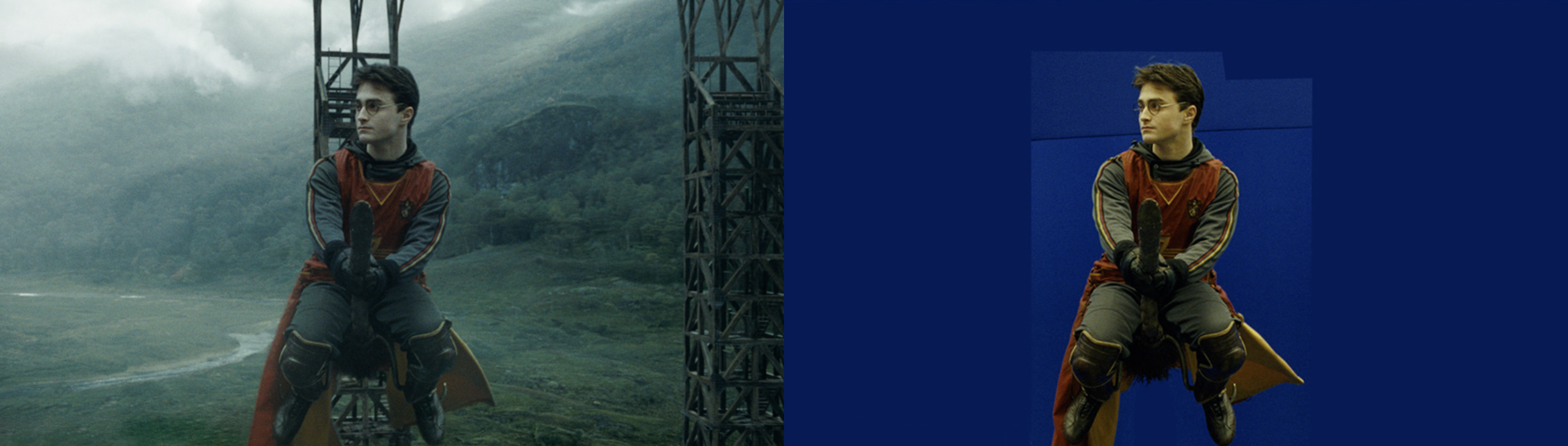
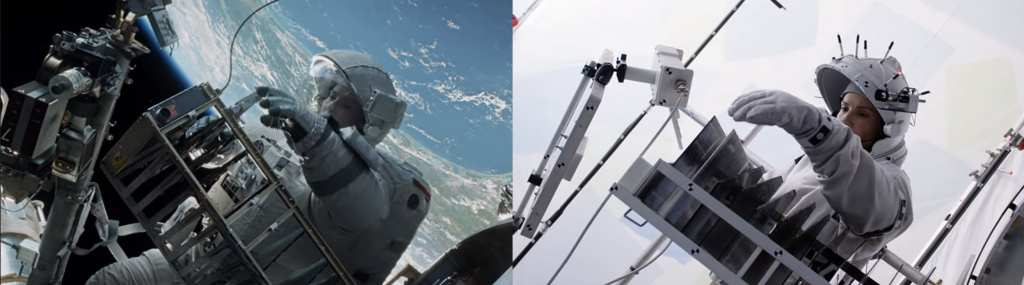
After the rendering process is complete, compositing comes into play to bring together all the different visual elements. Compositing in CGI means integrating computer-generated imagery with live-action footage, creating a convincing blend of real and virtual worlds.
This technique was notably showcased in the opening credits of Alfred Hitchcock’s film “Vertigo,” marking its early use in cinema history.
Compositing allows for the creation of natural-looking landscapes, architectural scenes, and accurate anatomical models for medical and scientific visualization purposes. It has also been utilized in diverse fields such as courtroom settings to visualize evidence, television weather casting, sports telecasting, and in conjunction with motion capture to achieve a more realistic appearance.
CGI versus Practical Effects
CGI and practical effects each have their own strengths, from how they are made to how they interact with live actors. Here is how they compare, before we look at each difference in detail:
| Factor | CGI | Practical effects |
|---|---|---|
| What it is | Images built or altered in software | Physical effects on set: models, prosthetics, pyro, animatronics |
| Cost | Often as costly as practical for photoreal work; not automatically cheaper | Cheap for a single simple gag, costly to repeat or scale |
| Flexibility | Unlimited revisions, any scale, the impossible or dangerous | Fixed once shot; changes mean reshoots |
| On-set realism | Must simulate light, physics, and eyelines | Real light, real interaction, real actor eyelines |
| How it ages | Holds up when done well (Jurassic Park, T2); dates when rushed | Holds up when done well; cheap practical also dates |
| Best for | Crowds, creatures, environments, invisible fixes | Tangible props, close contact, in-camera texture |
The differences in more detail:
Means of Creation
CGI is created using computer software and tools, such as 3D modeling, texturing, lighting, animation, simulations, rendering, and compositing. These techniques are used to bring virtual worlds and characters to life on the screen.
CGI artists use these tools to craft detailed landscapes, intricate character designs, and realistic movements that enhance storytelling in films. Motion-capture technology also records live actors’ movements and translates them into CGI animation that fits naturally into digital environments.
CGI also enables lifelike effects like fire or water simulations that would be difficult or dangerous to achieve for real. This way of working has transformed the film industry, letting filmmakers visualize and shoot scenes that used to exist only in science fiction.
Time and Cost
When considering the use of CGI in film and television, time and cost are significant factors that production teams must evaluate. One myth worth killing: CGI is not automatically cheaper than practical effects. High-end photoreal CGI is often just as expensive and just as slow. What CGI really buys you is flexibility and the ability to show things you could never safely or affordably shoot for real.
| Time | Cost |
|---|---|
| Creating CGI can be time-consuming as it involves multiple steps. | High-quality CGI requires substantial investment in software and hardware. |
| Detailed animations necessitate long hours from skilled artists. | Skilled professionals in the field command high wages for their expertise. |
| Complex simulations may extend the production schedule. | Emergent technologies in CGI can drive up costs further. |
| Post-production CGI work often overlaps with the movie’s editing phase. | Meticulous CGI demands a significant portion of a film’s budget. |
| Rush jobs can accelerate completion but might compromise quality. | Cost overruns in CGI can impact other areas of the production. |
Interactivity with Environment and Live Actors
Balancing CGI and practical effects also impacts the interactivity with the environment and live actors. Practical effects provide tactile elements for actors to interact with on set, enhancing their performances by providing tangible surroundings and objects.
On the other hand, when CGI effects are added in post-production, there is often little for the cast to interact with physically, requiring them to rely heavily on green screens or references that are later digitally inserted.
This difference affects how actors can fully immerse themselves in their roles and environments. While practical effects offer a more immediate and physical experience during filming, CGI requires actors to visualize and react to elements that will be added later in post-production.
Aesthetic
When it comes to the aesthetic aspect of CGI, the technology offers filmmakers and designers unparalleled creative control over the visual elements in their productions. With CGI, they can craft polished, coherent visuals that lift the overall look and feel of a movie or television show.
That control makes it possible to build otherworldly landscapes, fantastical creatures, and ambitious special effects that hold audiences and bring stories to life.
CGI’s aesthetic range also lets filmmakers push boundaries and explore new artistic horizons. By blending real-world footage with computer-generated imagery, directors can achieve visually striking compositions that traditional methods could never reach.
Balancing CGI and Practical Effects
Balancing CGI and practical effects in film production requires careful consideration of the story, budget, and integration to enhance the overall visual experience for viewers. Finding the right balance between the two techniques is what creates a believable, unified cinematic world.
Story and Tone
Filmmakers carefully balance CGI and practical effects based on the story and tone they want to convey. They understand that CGI should enhance the storytelling, not overshadow it or become the main focus.
Studios have recognized that a compelling narrative should take precedence over flashy visual effects, making sure that CGI is used as a tool to support and enrich the emotional impact of the story.
CGI is often employed to enhance practical effects, adding depth and realism to scenes in order to better reflect the intended tone of a film. By integrating CGI cleanly with live-action elements or physical effects, filmmakers can convey the mood and atmosphere they want without compromising authenticity.
Budget
Creating CGI effects primarily involves a significant budget due to the need for high-end computing technology, skilled professionals, and an extensive post-production process. The intricate nature of CGI necessitates substantial financial resources to ensure the final product meets industry standards and audience expectations.
As a result, films employing CGI often have higher production costs compared to those relying solely on practical effects.
While practical effects may offer a more tangible and authentic quality, the flexibility and expansive possibilities of CGI come at a cost. Despite advancements in technology making certain aspects of CGI more accessible, achieving top-tier results still requires considerable investment.
Integration
Filmmakers combine CGI and practical effects to deliver strong visual experiences. Together they produce convincing, realistic visual effects that serve the storytelling.
It also gives filmmakers the flexibility to balance between digital and physical elements, catering to different aspects of a storyline while staying within budget.
By blending CGI with practical effects, filmmakers maintain creative control over the aesthetic appeal and narrative direction of their films. The integration process involves carefully coordinating CGI sequences with live-action shots, ensuring a cohesive blend that brings the film’s vision to life.
Enhancing Practical Effects With CGI
Filmmakers enhance practical effects with CGI to create clean, absorbing visuals. This lets them work over live-action scenes, adding depth and complexity while keeping a realistic appearance.
By combining practical effects with CGI, filmmakers can portray larger-than-life scenarios, intricate details, and big visual set pieces that hold an audience.
CGI enhances practical effects such as 3D motion capture, aging actors on screen or de-aging them for flashbacks, creating elaborate battle scenes filled with dynamic movements and explosions while also rendering realistic fur and hair in characters.
Firsts in CGI History
- Vertigo (1958) is often cited as an early milestone, though its spiral title sequence was made with a mechanical analog computer rather than modern digital CGI.
- Westworld (1973) was the first feature film to use digital image processing, seen in the pixelated point of view of its android gunslinger.
- Futureworld (1976), its sequel, went further as the first feature to show true 3D computer-generated imagery, with a digital hand and face.
- Tron (1982) became a landmark for its roughly fifteen minutes of computer-generated environments. Contrary to a popular myth, it was not disqualified from an effects Oscar for cheating; much of its neon look was actually backlit hand animation.
- CGI also grew out of aviation and military flight simulators well before it reached the big screen.
Specific Uses of CGI
3D Motion Capture, Aging/De-Aging Actors, Battle Scenes, Fur and Hair, and Bullet Time are just some of the specific uses of CGI in movies that have changed the way filmmakers bring their visions to the screen.
3D Motion Capture
3D motion capture involves recording a person’s movements and then using that data to drive the movements of a 3D model in computer graphics. This technology has been widely used in the film industry to create realistic human or creature animation.
By capturing an actor’s performance with motion sensors, filmmakers can translate their movements into lifelike CGI characters, making them move and behave as if they were real.
Motion capture is not limited to just entertainment; it also plays a crucial role in scientific research as well as medical fields by providing accurate models for studies on human anatomy and physiology.
Aging/De-Aging Actors
Another common application of CGI is aging and de-aging actors. CGI technology lets filmmakers show characters at different life stages by digitally altering their appearance.
This technique involves modifying an actor’s visual characteristics using computer graphics, effectively creating a youthful or aged look without relying on makeup or prosthetics.
In recent times, the use of CGI to age or de-age actors has become increasingly prevalent in movies. By leveraging CGI technology, filmmakers can portray characters convincingly at various ages within a single film, enhancing storytelling and character development with realistic visual effects.
Battle Scenes
CGI enhances battle scenes in films and television, allowing for the creation of realistic virtual worlds and special effects. It enables the production of professional-grade battle sequences from home computers through virtual cinematography.
CGI is not limited to animated characters; it also generates realistic battle landscapes and scenes with computer algorithms, adding to more immersive viewing experiences.
Using CGI in military training and flight simulators adds to the portrayal of realistic battle scenes along with its application in sports tracking enhancing our experience during sports events by creating unique visual experiences.
Fur and Hair
To achieve lifelike depictions of creatures and characters in movies, CGI enhances fur and hair by utilizing FX simulation techniques. The process involves creating intricate textures and movements through procedural simulation, dynamic simulation, particle systems, and fluid systems.
Skilled artists play a crucial role in designing and animating realistic fur and hair to bring digital characters to life.
Lighting effects are then applied so the result sits naturally against live-action elements. This involved process aims to recreate how fur and hair really move in CGI scenes, for a more immersive result on screen.
Bullet Time
Bullet time, made famous by The Matrix, is worth a clarification, because it is not really CGI at all. It was primarily a practical technique: a rig of roughly 120 still cameras arranged around the actor on a green screen, firing in sequence so a single frozen moment could be viewed from a traveling angle.
CGI played a supporting role, interpolating frames between the cameras to smooth the motion and rebuilding the backgrounds in 3D. Bullet time is the textbook example of a practical effect and CGI working together, rather than a pure CGI shot.
CGI Before & After



CGI Today: Virtual Production and AI
The last few years have changed how CGI reaches the screen. On shows like The Mandalorian, huge LED walls, known as volumes, display computer-generated backgrounds live on set, so actors are lit by the world around them and the camera captures much of the effect in real time. Game engines like Unreal Engine now render film-quality CGI fast enough to light and frame a shot on the day, the way a cinematographer frames a real wide shot.
AI-generative tools are the newest and most debated arrival. They can produce imagery from a text prompt in seconds, which is a very different process from the hand-built, shot-by-shot control of traditional CGI, and the industry is still working out where each belongs.
From the color suite, the part I actually touch is the join. My job is to make the computer-generated shot and the camera-captured shot read as a single image: matching black levels and highlight rolloff, adding the same grain, and nudging the CG element until your eye stops separating it from the plate. When CGI looks fake, it is usually this last step that got rushed.
CGI is not only a film tool, either. In photography, computer-generated product renders now stand in for studio product shots across e-commerce and advertising, giving brands a perfect, repeatable image without a physical set. The line between a photograph and a render keeps getting harder to see, which is exactly the point.
The Bottom Line on CGI
CGI, Computer-Generated Imagery, is the digital craft behind most of what looks impossible on screen, from a T. rex to an entire alien moon. The best CGI usually is not the flashiest; it is the work you never notice, because it is lit and framed to match the real footage around it. From the color side of a production, that is the whole game: making the computer-generated and the camera-captured read as a single image.
If you want the camera half of that craft, read our guides to the dolly shot and the wide shot, and see why format matters for CGI spectacle in Cinemark XD vs IMAX.
Frequently Asked Questions
What does CGI stand for?
CGI stands for Computer-Generated Imagery. It is the use of computer graphics software to create still or moving images, and in film it usually refers to the 3D graphics used for characters, creatures, environments, and effects.
Is CGI the same as VFX?
No. CGI is one part of VFX. Visual effects, or VFX, is the whole craft of combining or altering footage after the shoot, which includes CGI along with compositing, matte paintings, and practical effect enhancements. In film, essentially all CGI counts as VFX, but not all VFX is CGI.
What was the first movie to use CGI?
Westworld (1973) was the first feature film to use digital image processing, and its sequel Futureworld (1976) showed the first 3D computer-generated imagery. Vertigo (1958) is an even earlier milestone, though its title sequence used a mechanical analog computer.
Is CGI more expensive than practical effects?
Not necessarily. High-end photoreal CGI is often just as expensive as practical effects, and just as time-consuming. CGI wins on flexibility and on doing the impossible, not on price.
How long does a CGI shot take?
It varies enormously. A simple clean-up shot might take days, while a complex hero creature or environment shot can take weeks or months across a team of artists, since it moves through modeling, rigging, animation, lighting, rendering, and compositing.
Why does some CGI look fake?
Usually because the computer-generated element is not matched to the real footage around it. When the lighting, motion blur, grain, or physics do not agree with the live-action plate, your eye notices. The best CGI is the work you never notice at all.