Updated November 2026. The short answer: CineStill 400D (400Dynamic) is a warm, fine-grain ISO 400 daylight film with unusually wide latitude: CineStill says you can rate it anywhere from EI 200 to 800 and develop it normally, and push it up to 3 stops. CineStill designed it for still photography; it is not re-spooled cinema film like CineStill 800T and 50D. The catch in 2026 is finding it: it’s made in limited batches and was out of stock at CineStill, Amazon and B&H when we checked, so we list alternatives below.
CineStill 400D is a popular 35mm color negative film that delivers beautiful results for both indoor and outdoor photography. With a base sensitivity of ISO 400, CineStill 400D offers wide dynamic range and rich, saturated colors that lend themselves well to creative film photography.
In this review, we’ll take a close look at everything you need to know about CineStill 400D, from its origins and technical details to how it performs under different lighting conditions.
We’ll also compare CineStill 400D to other popular color negative films like Kodak Portra 400 to help you decide if it’s the right film for your needs.
After reading, you’ll have a full understanding of what makes CineStill 400D such a unique and versatile 35mm film stock.
An Overview of CineStill 400D
CineStill 400D is a color negative film with a base ISO of 400, sold in 35mm (36 exposures), 120 and 4×5 sheets. It features a fine grain and rich color saturation that allows for beautiful results under both natural and artificial light.

CineStill designed 400D for still photography. It’s developed in standard C-41 chemistry, and it has an anti-static coating that survives processing, so it runs smoothly through manual cameras and motorized winders (CineStill).
Some key features that make CineStill 400D stand out include:
- A wide dynamic range, making it very forgiving for exposure errors
- Saturated colors with delicate skin tones
- Fine grain that allows for sharp images and printing
- Designed for shooting both indoors and outdoors
- Can be push-processed up to 3 stops when needed
CineStill 400D is an excellent all-around daylight film and a favorite of many photographers for its versatility. The rich color palette, subtle halation, and ability to push process make CineStill 400D a great choice for everything from landscapes to portraits.
Technical Details of CineStill 400D
Let’s take a more in-depth look at the technical details and specifications of CineStill 400D:
- Film Type: Color negative film
- Format: 35mm (36 exposures), 120 and 4×5 sheets
- Base ISO: 400
- Color: Daylight-balanced
- Grain: Fine
- Sharpness: Excellent resolution and sharpness
- Tones: Soft, delicate tones with excellent highlight roll-off
- Saturation: Vibrant, saturated colors
- Skin tones: Natural and pleasing
- Halation: Subtle; CineStill says it can appear at in-focus, overexposed highlights
- Development: C-41 process
- Exposure: EI 200 to 800 with normal processing; push up to 3 stops
- Price: $17.99 per 35mm roll from CineStill (November 2026)
A few key things stand out from these specifications. First is the extremely wide dynamic range of CineStill 400D, with a base sensitivity of ISO 400 that can be shot anywhere from ISO 200 to 800. This makes exposure quite forgiving with the film.
Secondly, the color rendition produces soft, delicate tones with natural skin colors yet still maintains vibrant saturation – a difficult balance to achieve with color film.
Finally, the daytime film balance and ultra fine grain allows for excellent sharpness and tonality. Overall, the technical characteristics of CineStill 400D lend themselves perfectly to versatile shooting for the modern film photographer.
The Story and Origins of CineStill 400D
CineStill built its name on motion picture film.
Its first films were Kodak cinema stocks with the remjet backing removed so they could go through standard C-41 processing: CineStill 800T comes from Kodak Vision3 500T (5219, pictured below) and CineStill 50D from Vision3 50D. That missing backing is what gives CineStill films their red halation.

400D is different. It launched in 2022 through a crowdfunding campaign as CineStill 400Dynamic, and CineStill describes it as a film designed specifically for still photography rather than a converted cinema stock. People often assume it is re-spooled Kodak motion picture film like 800T; CineStill doesn’t say that.
It keeps the cinematic color and the touch of halation CineStill is known for, in a film that is easier to expose and processes like any other color negative film.
Hands-On Review of CineStill 400D
To best understand the unique qualities of CineStill 400D, it helps to shoot a few rolls in different conditions.
We extensively tested this film in various environments to see how it rendered color, skin tones, and atmosphere.
Here’s an overview of CineStill 400D’s performance:
Shooting Outdoors
When shot in natural daylight, CineStill 400D delivers pleasing colors with medium-high contrast. Greens and blues are vivid but not oversaturated, while retaining detail in highlights and shadows. Complex lighting situations are handled beautifully thanks to the wide exposure latitude.

Skin tones remain natural and flattering outdoors. The fine grain holds up even in larger prints. While contrast is higher than some films, the delicate highlight rolloff maintains airy tonality. Overall, CineStill 400D performs excellently in sunlit conditions.
Shooting Indoors/Artificial Light
Indoors, CineStill 400D retains its saturated but natural color palette. Skin tones reproduce well under most lighting. The wide dynamic range handles mixed lighting very nicely.

There is a moderate halation effect when shot under tungsten and other artificial light, giving glowy highlights and accentuating the cinematic look. This only adds to the atmosphere.
Overall CineStill 400D holds up very well indoors, rendering excellent color and tonality under artificial light. Just adjust white balance during scanning, and the results will be vibrant and accurate.
Pushing/Pulling Exposure
Thanks to the incredible exposure latitude, you can shoot CineStill 400D at anywhere from ISO 200 to 800 and get great results. This comes in handy when you want to tweak the contrast and grain size.
Shooting at ISO 200 reduces grain and increases dynamic range, while ISO 800 will deliver a grittier, high-contrast look when desired. This level of flexibility makes CineStill 400D hugely versatile.
Pushing further to ISO 1600 or 3200 is also an option with this film. Results remain very usable. Just be prepared for a very distinct sifted grain at 3200 that works well for some subject matter.
CineStill’s own push chart is more conservative at the top end. It suggests rating the film a little slower than the push would imply:
| Processing | Rate the film at |
|---|---|
| Normal (no push) | EI 200 to 800 |
| Push 1 stop | EI 400 to 1000 |
| Push 2 stops | EI 800 to 1600 |
| Push 3 stops | EI 1000 to 2000 |
Editing and Post-Processing
When scanning CineStill 400D, you can make some adjustments to finalize the look you want:
- Increase contrast slightly for bolder, punchier images
- Reduce contrast for a softer, more delicate feel
- Adjust white balance towards blue to neutralize indoor tungsten lighting
- Increase vibrance and saturation for more intense color
- Add film grain overlays to accentuate the cinematic quality
The pliable RAW files allow for versatility when editing CineStill 400D scans. This gives the ability to tweak images towards your desired mood and atmosphere during post-processing.
How CineStill 400D Compares to Other Color Films
It helps to understand how CineStill 400D compares to other popular color negative films.
Here’s a quick overview:
Kodak Portra 400 – Portra 400 has lower saturation and contrast. It yields a very natural, smooth look, especially for outdoor portraits. CineStill 400D has more grain, halation effects, and richer saturation.

Fujifilm Superia 400 – Superia 400 also has lower saturation than CineStill 400D and renders a brighter, cooler tone. It’s a great outdoor daylight film but can’t match CineStill’s halation and cinematic rendering.

Kodak ColorPlus 200 – For a cheaper C41 option, ColorPlus 200 has good saturation but a more consumer-grade look and wider grain. CineStill has finer grain and greater dynamic range.

Kodak Ektar 100 – Ektar 100 is an extremely fine grain, clean film perfect for landscapes but with lower saturation than CineStill 400D. If you need fine detail, Ektar showcases this beautifully.

So in summary, CineStill 400D stands out with its cinematic quality, rich halation effects, and ability to render saturated but natural colors across lighting conditions. No other color film quite has its look and versatility.
| Film | Speed | Light | Halation | Look |
|---|---|---|---|---|
| CineStill 400D | ISO 400 (EI 200 to 800) | Daylight | Subtle | Warm, saturated, soft contrast |
| Kodak Portra 400 | ISO 400 | Daylight | None | Natural, lower saturation, smooth skin tones |
| CineStill 800T | ISO 800 | Tungsten (indoor and night) | Strong | Cool at night, red glow around lights |
| CineStill 50D | ISO 50 | Daylight | Yes, in bright highlights | Very fine grain, clean color |
Achieving the Best Results with CineStill 400D
Here are some tips for getting the most out of each roll of CineStill 400D:
- Avoid underexposure to prevent muted colors and detail loss in shadows
- Shoot in shade or overcast conditions to control contrast
- Use flash to lift shadows and fill in facial details
- Embrace mixed lighting – the film handles it beautifully
- Rate it at EI 800 for grittier, higher contrast shots (no push processing needed)
- Rate it at EI 200 for a smoother look with less grain (normal processing)
- Edit white balance, contrast, saturation and grain to taste
- Use CineStill’s unique look creatively to match your vision
With some experience, you’ll learn how to craft vibrant, cinematic images full of atmosphere using this incredible film stock. Let CineStill 400D’s qualities inspire your photography.
Where to Buy and Store CineStill 400D Film
CineStill 400D comes in 35mm, 120 and 4×5 sheets, but it’s produced in limited batches. When we checked in November 2026 it was out of stock on Amazon, at B&H and in CineStill’s own store ($17.99 a roll, limit two per customer), so sign up for CineStill’s restock alert or ask your local camera store or lab.
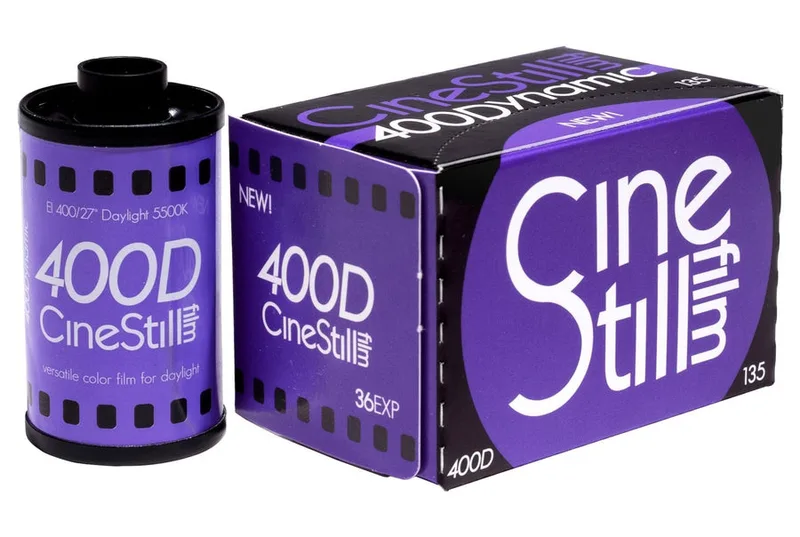
If you can’t find it: CineStill 800T is the pick for night and indoor light, with stronger halation; CineStill 50D suits bright daylight and has even finer grain; and Kodak Portra 400 is the easy-to-find ISO 400 alternative, cleaner and more neutral, without halation.
When storing CineStill 400D film, keep the following guidelines in mind:
- Store unopened film sealed in its package in the refrigerator, at 13°C (55°F) or lower as CineStill recommends
- Store opened film rolls in the fridge if shooting over several months
- Let refrigerated film warm up to room temperature before opening the package, so no condensation forms
- Avoid prolonged heat exposure or x-ray scanning devices
- Shoot it before the expiry date and have it developed soon after shooting
Follow these handling and storage principles, and your CineStill 400D film will deliver excellent results.
Shooting With CineStill 400D – Conclusion
As you can see, CineStill 400D offers some unique qualities that make it a standout color negative film. The cinema origins provide gorgeous color rendition and halation effects perfect for creative photography. It handles all sorts of lighting conditions beautifully thanks to the wide dynamic range and balanced saturation.
If you enjoy shooting 35mm film, CineStill 400D is a must-try. Keep some on hand for portraits, urban landscapes, night photography or any imaging where you want a rich atmosphere. With care taken in exposing and processing, CineStill 400D won’t disappoint.
So next time you have the film itch, load up your Leica or Nikon F with this versatile color stock and see the creative possibilities it unlocks. If you need a camera to shoot it in, see our guide to the best point-and-shoot film cameras; any lab that develops color film can process it, including the mail-in labs in our guide to getting film developed.
With practice, you’ll be crafting vivid, cinematic masterpieces in no time. CineStill 400D opens up so many options to capture life creatively on film.
CineStill 400D FAQ
What is CineStill 400D and what makes it unique as a color negative film?
CineStill 400D (400Dynamic) is an ISO 400 daylight-balanced color negative film that CineStill designed for still photography. It’s known for warm, saturated color, soft contrast, subtle halation on bright highlights and unusually wide latitude: you can rate it anywhere from EI 200 to 800 with normal processing.
Can you shoot CineStill 400D at ISO 200 or ISO 800?
Yes. CineStill says it can be exposed at EI 200 to 800 and developed normally. Rated at 200 it gives denser negatives with smoother grain and more shadow detail; at 800 it looks grittier, with more contrast.
What is the recommended processing method for CineStill 400D?
Standard C-41, at any lab that develops color film or at home with a C-41 kit. If you rated it faster than EI 800, ask the lab to push-process it, by up to 3 stops.
How does CineStill 400D compare to CineStill 50D and CineStill 800T?
It sits between them. 50D is an ISO 50 daylight film with the finest grain, for bright sun. 800T is an ISO 800 tungsten-balanced film for night and indoor light, with strong red halation. Both are made from Kodak Vision3 motion picture film; 400D was designed for still photography.
Does CineStill 400D have halation?
Yes, but it’s subtle. Halation is the red-orange glow around bright lights and highlights that CineStill films are known for. CineStill says it can appear on 400D at in-focus, overexposed highlights, and we saw it most under tungsten and other artificial light.
How should I store unexposed CineStill 400D film?
Sealed in its package in the fridge, at 13°C (55°F) or lower, as CineStill recommends. Let it warm to room temperature before opening so no condensation forms, and have it developed soon after shooting.
How many exposures does CineStill 400D have?
A 35mm roll has 36 exposures. 400D also comes in 120 for medium format cameras and in 4×5 sheets for large format.
Can I use CineStill 400D in both daylight and artificial light?
Yes. It’s balanced for daylight but handles mixed and artificial light well. Under tungsten light the scans come out warm, which you can correct while scanning or editing.
What is CineStill 400D best for?
Everyday shooting: portraits, street, travel and landscapes, especially when the light changes during a roll, since you can rate it anywhere from EI 200 to 800.
Is CineStill 400D motion picture film?
No. CineStill describes 400D as designed specifically for still photography. CineStill’s 800T and 50D are the ones made from Kodak Vision3 motion picture films (500T and 50D).
Is CineStill 400D discontinued?
CineStill hasn’t said so. It still lists 400D at $17.99 per 35mm roll with a limit of two, but it’s made in limited batches, and in November 2026 it was out of stock at CineStill, Amazon and B&H.
How far can you push CineStill 400D?
Up to 3 stops. CineStill recommends rating it at EI 400 to 1000 for a 1-stop push, 800 to 1600 for 2 stops and 1000 to 2000 for 3 stops.
Is CineStill 400D better than Kodak Portra 400?
It’s different rather than better. 400D is warmer and punchier and shows some halation; Portra 400 is more neutral, with smoother skin tones and no halation, and it’s much easier to find.
As an Amazon Associate, Artistic Hive earns from qualifying purchases.